SALT LAKE CITY, May 20, 2026 /PRNewswire/ -- The Church of Jesus Christ of Latter-day Saints announced today a $25 million commitment to UNICEF for the Child Nutrition Fund (CNF) – a contribution that will unlock an additional $25 million through the CNF Match Challenge, announced at the Nutrition for Growth Summit in March 2025.
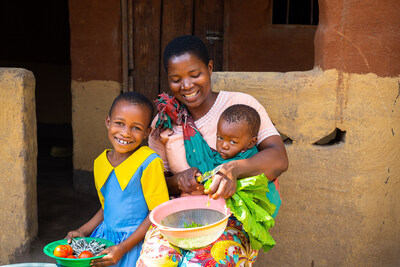
The combined $50 million will strengthen the CNF's efforts to reach 320 million children and women each year by 2030 with proven interventions, including maternal nutrition, breastfeeding and complementary feeding, micronutrient supplementation, and the early detection and treatment of wasting. The Church's contribution will support nutrition programs in the Democratic Republic of the Congo, Kenya, Nigeria, the Philippines, and Sierra Leone, delivering evidence-based interventions while strengthening government systems to ensure these essential services are sustainably provided to women and children with the greatest needs.
"We are grateful to work with UNICEF to improve the health and nutrition of women and children," said Presiding Bishop W. Christopher Waddell of The Church of Jesus Christ of Latter-day Saints. "Our long-standing work with UNICEF reflects shared values and a commitment to care for those in need around the world. The Church's efforts to care for those who are vulnerable are guided by the teachings of Jesus Christ to seek out and serve individuals."
Undernutrition contributes to nearly half of all child deaths worldwide, with 181 million children facing severe food poverty – lacking access to even the most basic nutritious diets. An estimated 150 million children are affected by stunting, a chronic form of malnutrition that results in impaired growth and development, while 43 million more are affected by wasting, a life-threatening form of malnutrition, where children lose critical mass of body fat and muscle.
The CNF is a UNICEF-led multi-donor financing mechanism designed to accelerate scaling-up of evidence-based, high-impact actions to tackle critical nutrition challenges, including stunting and wasting in children, and anemia in women, in the world's highest-need countries. By addressing both prevention and treatment, the CNF bridges critical gaps in nutrition services, ultimately saving lives and building resilience in vulnerable communities.
"UNICEF is grateful to The Church of Jesus Christ of Latter-day Saints for its long commitment to improving the lives of children, and for this generous contribution," said UNICEF Executive Director Catherine Russell. "It comes at a critical time and will help deliver lifesaving nutrition to millions of children and women who need it the most."
"Every child deserves a healthy start, and our multiyear focus on maternal and child nutrition is designed to invest directly in the future. By addressing these critical dietary shortages, we are empowering mothers to help their children reach their potential," said Camille N. Johnson, General President of the Relief Society of The Church of Jesus Christ of Latter-day Saints.
UNICEF does not endorse any company, brand, organization, product or service.
About The Church of Jesus Christ of Latter-day Saints
The humanitarian efforts of The Church of Jesus Christ of Latter-day Saints seek to relieve suffering, foster self-reliance and provide opportunities for service around the world. According to the Church's Caring for Those in Need: 2025 Report, these efforts included $1.58 billion in expenditures, 7.4 million hours of volunteer service, and 3,514 humanitarian projects in 196 countries and territories. Assistance is provided without regard to race, religion or nationality. Learn more at Caring.ChurchofJesusChrist.org.
About UNICEF USA
UNICEF USA advances the global mission of UNICEF by rallying the American public to support the world's most vulnerable children. Together, we are working toward a world that upholds the rights of all children and helps every child thrive. For more information visit unicefusa.org.
About the CNF
The Child Nutrition Fund is a UNICEF-led coordination and funding mechanism designed to accelerate the scale-up of sustainable policies, programmes and supplies to end child and maternal undernutrition in high-need countries.
For more information, visit: www.childnutritionfund.org

Photo - https://mma.prnewswire.com/media/2984407/The_Church_of_Jesus_Christ_of_Latter_day_Saints___house_in_Mukwala_Village.jpg
Photo - https://mma.prnewswire.com/media/2984408/The_Church_of_Jesus_Christ_of_Latter_day_Saints__Laveille_Kone__cuddling_her_6_month_old_baby_Koroto.jpg
 View original content:https://www.prnewswire.co.uk/news-releases/the-church-of-jesus-christ-of-latter-day-saints-commits-25-million-to-the-unicef-led-child-nutrition-fund-302777901.html

Österreich hat drei russische Diplomaten wegen des Verdachts der Spionage des Landes verwiesen und sie zu „persona non grata“ erklärt. Nach Angaben der Regierung sollen die betroffenen Mitarbeiter der russischen Vertretungen in Wien in Aktivitäten verwickelt gewesen sein, die als nachrichtendienstliche Operationen gelten. Die Außenministerin Beate Meinl-Reisinger betonte, es sei „inakzeptabel“, diplomatische Immunität für Spionage zu nutzen. Laut einer Erklärung aus Wien haben die drei Diplomaten Österreich bereits verlassen.
Nach Berichten des österreichischen Rundfunks ORF sollen die Diplomaten direkt in satellitengestützte Überwachungstätigkeiten involviert gewesen sein. Es geht demnach um mutmaßliche Spionage gegen in Wien ansässige internationale Organisationen unter Nutzung von Satellitentechnik auf dem Gelände der russischen Botschaft und des russischen Diplomatenkomplexes. Die Regierung hatte bereits im April die Aufhebung der diplomatischen Immunität der drei Betroffenen gefordert, Moskau kam dieser Forderung jedoch nicht nach. Die österreichische Außenministerin verwies in diesem Zusammenhang auf die „Vielzahl von Antennen“ auf den Dächern russischer Vertretungen in Wien, die als Sicherheitsrisiko eingestuft werden.
Wien reagiert auf den Fall auch mit einer geplanten Verschärfung des Strafrechts. Bislang ist Spionage durch ausländische Nachrichtendienste in Österreich nur strafbar, wenn sie sich direkt gegen österreichische Interessen richtet. Die Bundesregierung will nach einem Vorschlag des Justizministeriums einen zusätzlichen Tatbestand einführen, der auch die Interessen internationaler Organisationen – etwa der Vereinten Nationen und ihrer Spezialorganisationen mit Sitz in Wien – schützt. Zudem sollen bestehende Spionageparagrafen verschärft werden. Wien ist nach New York und Genf eines der wichtigsten diplomatischen Zentren weltweit und beherbergt zahlreiche internationale Einrichtungen.
Das russische Botschaftspersonal reagierte empört auf die Entscheidung. Die russische Botschaft in Wien bezeichnete die Ausweisung als „ungehörig, unbegründet, politisch motiviert und völlig inakzeptabel“ und kündigte „scharfe Gegenmaßnahmen“ an. Nach Angaben von Medien sind in Österreich rund 220 Mitarbeiter der russischen Botschaft akkreditiert; seit Beginn des russischen Militäreinsatzes in der Ukraine im Jahr 2022 wurden bereits rund ein Dutzend russischer Diplomaten des Landes verwiesen. Nach Zählung der Nachrichtenagentur Reuters summierten sich die Ausweisungen seit 2020 auf 14 russische Diplomaten. Aus Moskau kam zunächst keine detaillierte Reaktion auf die jüngste Entscheidung der österreichischen Regierung.