Guided by its APEX philosophy, TCL CSOT extends its vision through APEX Pixel, delivering immersive, efficient, and eye‑friendly display experiences across home entertainment, mobile communication, smart mobility, and personal immersion.
LOS ANGELES, May 6, 2026 /PRNewswire/ -- TCL CSOT, a global leader in advanced display technologies and a subsidiary of TCL Technology, today presented its forward‑looking vision for the display industry at SID Display Week 2026. Anchored in its APEX philosophy, this vision is expressed through the APEX Pixel framework, which delivers pixel‑level breakthroughs across FMM OLED, IJP OLED, LCD, and other advanced display technologies. At the event, TCL CSOT showcases how these innovations are shaping the next generation of experiences in home entertainment, smart mobility, mobile communication, and immersive experience.
"APEX is more than a benchmark in display technology. It is a bridge connecting us with consumers worldwide," said Jun Zhao, SVP of TCL Technology and CEO of TCL CSOT. "Through APEX-led, full-stack innovation, TCL CSOT is making 'Display the Future' accessible in the era of Al across every aspect of everyday life. This year, our IJP OLED solutions will also debut in the mid-size segment."
The APEX Philosophy: A Human‑Centric Vision for Displays
APEX is TCL CSOT's systematic answer to what defines a truly great display. It is built on four pillars that guide research and development to ensure every innovation delivers meaningful, human-centric benefits:
Bringing the APEX Vision to Life Across Everyday Scenarios
At SID Display Week 2026, TCL CSOT demonstrated how its APEX philosophy — embodied in the APEX Pixel framework — is applied to enhance key aspects of modern life.
Home Entertainment Scenario

Bringing the "Amazing Display Experience" pillar to the living room, the World's Largest HVA Ultra TV Display (130") breaks traditional LCD size boundaries and redefines large-format design with an ultra-slim 29.8 mm profile. Meanwhile, the World's Highest Image Quality WHVA Ultra LCD TV Display (85") uses a native RGBC four-color pixel arrangement. This APEX-driven innovation delivers color reproduction that is more lifelike and natural, creating a deeply immersive home cinema experience for the whole family.
Smart Mobility Scenario
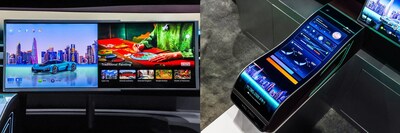
The APEX vision for a seamless, integrated user experience extends into the vehicle with the Intelligent Cockpit Display Suite 3.0. Its centerpieces — the World's First IJP OLED Sliding Central Control Display (28"), a dynamic sliding control screen, and the World's First IJP OLED Curved Armrest Display (28"), a sculpted curved armrest screen — showcase how the flexibility of IJP OLED technology can create a more intuitive, integrated, and seamless "third living space."
Daily and Business Scenario
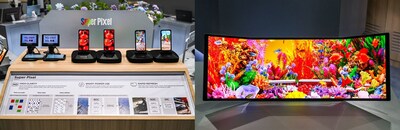
To meet the evolving demands of modern mobile communication, TCL CSOT's APEX-driven solutions prioritize performance and flexibility, with Super Pixel technology delivering mobile displays with Higher Clarity, Smarter Power Use, and Rapid Refresh.
For hybrid work, the World's First Foldable & Portable IJP OLED Monitor Display (28") brings IJP OLED technology into a highly versatile design, transforming from a compact device into an expansive ultra-wide screen that empowers productivity anywhere.
Immersive Entertainment Scenario
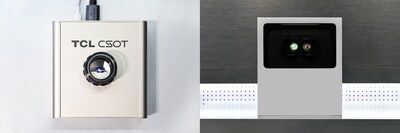
Pushing the boundaries of imagination, TCL CSOT's "X-Unlimited Imaginative Potential" vision for XR is realized in forward-looking concepts. Innovations like the World's Highest PPI Single-Chip Full-Color Si-Micro LED Display (0.28") and the World's Highest 1700PPI Real RGB G-OLED Display (2.24") offer a glimpse into a future of deeply personal and interactive entertainment, made possible by the pioneering spirit of APEX.
- End -
About TCL CSOT
Established in 2009, TCL China Star Optoelectronics Technology Co., Ltd. (TCL CSOT) is a leading global innovator in display technologies. Its LCD, OLED, and MLED solutions power applications across TVs, smartphones, tablets, laptops, monitors, automotive systems, VR/XR, and commercial displays. With a clear strategic direction set by its advanced display technology brand APEX, TCL CSOT invests continuously and strategically in R&D, driven by a mission to amaze, protect and inspire all people through endlessly innovative display technology. As part of TCL's Worldwide Olympic Partnership, TCL CSOT is proud to deliver display solutions that elevate experiences on the global stage.
Photo - https://mma.prnewswire.com/media/2973718/WhatsApp_Image_2026_05_06_at_3_52_54_PM.jpg
Photo - https://mma.prnewswire.com/media/2973716/WhatsApp_Image_2026_05_06_at_3_52_53_PM__1.jpg
Photo - https://mma.prnewswire.com/media/2973719/WhatsApp_Image_2026_05_06_at_3_52_53_PM.jpg
Photo - https://mma.prnewswire.com/media/2973717/WhatsApp_Image_2026_05_06_at_3_52_52_PM.jpg
 View original content:https://www.prnewswire.co.uk/news-releases/tcl-csot-highlights-apex-powered-display-innovations-for-next-gen-applications-at-sid-display-week-2026-302764161.html

Österreich hat wegen mutmaßlicher Abhör-Spionage drei Mitarbeiter der russischen Botschaft in Wien ausgewiesen und damit seinen Kurs gegenüber ausländischen Geheimdiensten deutlich verschärft. Auslöser sind umfangreiche Antennenanlagen auf den Dächern der russischen Botschaft im dritten Wiener Gemeindebezirk sowie auf einer russischen Diplomatensiedlung in der Donaustadt. Über diese Signalaufklärungsanlagen sollen nach Angaben österreichischer Behörden Daten abgefangen werden, die unter anderem von internationalen Organisationen über Satelliteninternet übermittelt werden.
Der Verfassungsschutz verweist in seinem aktuellen Bericht ausdrücklich auf die Anlage in der Donaustadt und warnt vor einem Reputationsschaden für Österreich durch die von Wien ausgehenden Aktivitäten. Die Direktorin des Staatsschutzes (DSN), Sylvia Mayer, stuft die russischen Signalaufklärungsanlagen aufgrund ihrer Größe und technischen Ausstattung als bedeutenden Risikofaktor ein. Neben Russland nennt der Bericht auch China und den Iran als besonders aktive Akteure, die eine hybride Bedrohungsstrategie mit Cyberangriffen, Spionage und Desinformation verfolgen.
Die Justiz hatte gegen drei technische Mitarbeiter der russischen Botschaft wegen des Verdachts geheimdienstlicher Tätigkeit im Zusammenhang mit den Abhöranlagen ermittelt. Um weitergehende Untersuchungen zu ermöglichen, forderte das Außenministerium die Aufhebung ihrer diplomatischen Immunität und setzte dafür eine Frist von 14 Tagen. Da Moskau dieser Aufforderung nicht nachkam, erklärte Wien die drei Betroffenen zu unerwünschten Personen. Sie mussten Österreich verlassen; ihre Immunität wurde nicht aufgehoben.
Außenministerin Beate Meinl-Reisinger bezeichnete Spionage als Sicherheitsproblem für Österreich und sprach von einem Kurswechsel der Regierung, die nun konsequenter dagegen vorgehen wolle. Es sei inakzeptabel, diplomatische Privilegien für nachrichtendienstliche Zwecke zu nutzen, habe Wien der russischen Seite unmissverständlich mitgeteilt. Russland kündigte laut der staatlichen Nachrichtenagentur RIA eine harte Reaktion auf die Ausweisungen an. Seit Beginn des Ukraine-Krieges hat Österreich nach Behördenangaben insgesamt 14 Mitarbeiter der russischen Botschaft ausgewiesen, dennoch sind weiterhin rund 220 Personen an russischen Vertretungen im Land akkreditiert.
Parallel zu den diplomatischen Maßnahmen treibt die Bundesregierung eine Reform des Strafrechts voran. Staatssekretär Jörg Leichtfried erklärte, man befinde sich in Schlussverhandlungen über ein neues Spionagegesetz. Der bislang stark eingeschränkte Spionagebegriff solle deutlich erweitert werden, um verdeckte Einflussnahme und technische Aufklärung besser erfassen zu können. Die Ausweisung der drei Techniker wertet die DSN-Führung als Schritt, um die Risiken durch die Antennenanlagen in Wien zu reduzieren, während sich die Beziehungen zwischen Wien und Moskau weiter eintrüben.