LG Reinforces Technology Leadership with IVI and SDV Technologies Delivering Seamless Multi-Display Experiences and Optimized Single-SoC Performance
News Summary
SEOUL, South Korea, May 28, 2026 /PRNewswire/ -- LG Electronics (LG) showcased its latest suite of in-vehicle infotainment (IVI) and software-defined vehicle (SDV) solutions, which earned strong recognition from Google and global automakers.
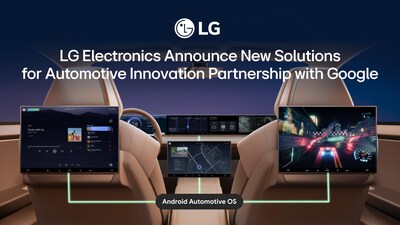
Showcasing LG's AAOS-Based Innovations
A new range of solutions is built on Android Automotive OS (AAOS) and AAOS SDV technologies. While AAOS SDV enables software to define and control core vehicle functions from driving performance and convenience features to safety systems, AAOS serves as the foundation for delivering infotainment experiences to passengers.
Enabling Seamless Multi-Display Experiences with a Single SoC
A key element is a new solution for simultaneously controlling multiple in-vehicle displays. Powered by Qualcomm Technologies' next generation Snapdragon® Cockpit Platform, LG's solution offers clear, vibrant images and smooth, stable performance enabling a seamless experience across navigation, vehicle information, and entertainment.
Unlike conventional in-vehicle display systems, which require a separate control chip for each screen, LG's AAOS-based solution can simultaneously control multiple displays with different aspect ratios using only a single system-on-chip (SoC). Leveraging LG's efficient resource allocation technology and system load optimization capabilities, the solution supports automakers to significantly reduce the cost of deploying multi-display in-cabin systems.
Delivering Personalized and Intuitive In-Cabin Experiences
LG's technology allows each person in the vehicle to view different content at the same time. For example, the driver can use navigation on the main display while the front-seat passenger watches YouTube, and the rear-seat passengers enjoy live TV content on their respective screens. The solution also supports individual user login accounts, personalized settings, content sharing and parental controls, enabling a more customized and flexible in-cabin entertainment experience for every passenger.
Additionally, LG has enhanced its voice command-based user interface to provide easier control in large panoramic dashboard environments. With simple spoken commands, users can adjust screen layouts, control key vehicle functions, launch apps and manage system volume. The reduced need for touch interaction contributes to improved convenience and safety in-cabin.
Strengthening Collaboration With Google for the SDV Era
Google executives commended LG's solution for its stable performance, differentiated user experience and ability to support cluster and media entertainment functions through a single SoC.
The solution also received a favorable evaluation for its flexibility in various SoC environments, its potential suitability for a wide range of automotive applications, and its broad chipset compatibility. The positive response reaffirmed the strength of LG and Google's partnership and signaled further opportunities for collaboration.
"LG's solution clearly demonstrated how AAOS can enable more flexible, intelligent and engaging in-vehicle experiences," said Patrick Brady, vice president of Android Automotive at Google. "Its seamless multi-display integration, intuitive voice controls and stable performance powered by a single SoC stood out, and we look forward to continuing our collaboration with LG to advance innovation for the SDV era."
"We are honored that our technological expertise and commitment to customer experience innovation have been recognized," said Eun Seok-hyun, president of the LG Vehicle Solution Company. "Through continued collaboration with Google and other major global tech partners, LG will continue to deliver differentiated in-vehicle customer experiences."
About LG Electronics Vehicle Solution Company
The LG Vehicle Solution Company (VS) is bringing LG's unique mobility innovations to the automotive industry. As a trusted and innovative partner, the company provides intelligent solutions including head units, displays, connectivity, ADAS vision systems, and software solutions integrating human-centered AI and automotive engineering into the modern AI/software-defined vehicle. Committed to "Driving better future mobility," the company has diversified its portfolio to further strengthen its capabilities, including automotive lighting systems, e-powertrain and cybersecurity. For more information, visit www.LG.com/global/mobility. To stay updated with the latest news, subscribe to the LG mobility newsletter, LG Loop at www.LG.com/global/mobility/newsletter and follow the LG VS Company LinkedIn channel at www.linkedin.com/company/lgvehiclesolution.
Photo - https://mma.prnewswire.com/media/2988506/LG_Google_GAPB_2026_MUMD_demo_F.jpg
 View original content:https://www.prnewswire.co.uk/news-releases/lg-electronics-announces-new-solutions-for-automotive-innovation-partnership-with-google-302783807.html

Der Halbleiter- und Lichtkonzern ams-Osram stellt sein Geschäftsportfolio neu auf und setzt dabei verstärkt auf Wachstumsmärkte wie Komponenten für Augmented-Reality-Brillen und intelligente Lichttechnologien. Vorstandschef Aldo Kamper bezeichnete den Verkauf der nicht optischen Sensorsparte an Infineon als wichtigen Schritt, um das Unternehmen „für die Zukunft aufzustellen“. Die Transaktion soll dem Konzern 570 Millionen Euro einbringen und nach aktueller Planung zum 1. Juli abgeschlossen werden.
Mit dem Verkauf trennt sich ams-Osram von einem Geschäftsbereich, der rund sieben Prozent zum Konzernumsatz beigesteuert hat, reduziert im Gegenzug aber die eigene Verschuldung deutlich. Laut Kamper kann die Schuldenlast um etwa ein Drittel gedrückt werden, die jährlichen Zinszahlungen sollen in den kommenden Jahren von rund 300 Millionen Euro auf etwa die Hälfte sinken. Der so gewonnene finanzielle Spielraum soll in den Ausbau bestehender Geschäftsfelder und in neue Produkte fließen.
Im Zentrum der Wachstumsstrategie stehen Komponenten für Augmented-Reality-Brillen. Bereits heute liefert ams-Osram Sensorelemente an Hersteller solcher Systeme, wenn auch in nach Kamps Worten noch „überschaubarem“ Ausmaß. Mittelfristig rechnet der CEO mit einem stark wachsenden Markt: Anfang der 2030er-Jahre hält er weltweit jährlich 50 bis 100 Millionen verkaufte AR-Brillen für denkbar, ab der Mitte des Jahrzehnts möglicherweise mehr. AR-Brillen sollen reale Umgebungen erweitern, Navigationsinformationen einblenden, Gesichtserkennung ermöglichen oder Vitalparameter überwachen; Nutzungsszenarien sieht Kamper in großer Bandbreite.
Parallel dazu baut ams-Osram digitale Photonik- und LED-Lösungen aus, etwa hochauflösende und „intelligente“ Scheinwerfer, die bereits im Automotive-Bereich im Einsatz sind. Dieses Geschäft bringt derzeit Erlöse im zweistelligen Millionenbereich ein, bis 2028 peilt das Management einen Umsatz von mehr als 100 Millionen Euro an. Weitere Zukunftschancen sieht der Konzern in Lasersystemen für den Rüstungssektor, wo ebenfalls mit zusätzlichem Wachstum gerechnet wird.
Für den Hauptstandort Premstätten in der Steiermark erwartet das Unternehmen trotz der Portfoliobereinigung keine einschneidenden Einschnitte. Nach Abschluss der Infineon-Transaktion sollen 70 Beschäftigte aus der Entwicklung an den Grazer Infineon-Standort wechseln, während Infineon vorerst weiterhin aus dem Werk in Premstätten beliefert wird. ams-Osram bleibt damit auf absehbare Zeit als Auftragsfertiger aktiv. Die Mitarbeiterzahl am Standort soll von derzeit etwa 1.450 bis 2030 auf 1.550 steigen, gestützt von Förderzusagen der Republik Österreich von bis zu 227 Millionen Euro, unter anderem aus dem EU Chips Act.