AMSTERDAM, July 14, 2026 /PRNewswire/ -- According to the latest Atradius Economic Outlook, the risk of a more severe stagflation shock has been contained for now. The ceasefire between the US and Iran has helped ease pressure on energy prices following months of disruption to energy flows through the Strait of Hormuz. Atradius forecasts global GDP growth of 2.4% in 2026, down from 3.0% in 2025, before recovering to 3.1% in 2027. While the conflict has weighed on economic activity through higher energy and commodity costs, the baseline outlook assumes a gradual reopening of the strait, helping the global economy avoid a sharper downturn.

"While the conflict in Iran has pushed up energy costs and created a mild stagflation shock, the feared stagflation spiral is likely to be avoided as long as tensions remain broadly contained. The continued technology and AI investment boom is helping to cushion the impact," said John Lorié, Chief Economist at Atradius.
The report identifies the AI and technology investment boom as a key source of support for the global economy. Strong spending on data centres, semiconductor manufacturing, cloud infrastructure and related technologies continues to underpin growth, particularly in the US, while AI-related trade remains an important driver of international commerce.
The energy shock is forcing the world's major central banks to respond in different ways. While the European Central Bank has raised interest rates to contain inflation, the US Federal Reserve is keeping rates higher for longer and delaying monetary easing. In contrast, China continues to maintain a moderately loose monetary stance to support domestic demand. The contrasting responses highlight how unevenly the impact of the Iran conflict is being felt across the world's largest economies.
Global trade is expected to lose momentum after a stronger-than-expected 2025. Higher energy costs, weaker import demand and persistent trade policy uncertainty are forecast to keep trade growth below 2% in 2026, before recovering to around 3% in 2027.
Atradius warns that risks remain firmly tilted to the downside. The main threat to the outlook is a re-escalation of the conflict between the US and Iran. In a downside scenario where fighting resumes and the Strait of Hormuz remains largely closed until the fourth quarter, while alternative shipping routes also come under threat, energy prices would surge again. In this scenario, inflation would accelerate and global GDP growth would fall to recessionary levels of 1.9% in 2026 and 1.4% in 2027. Major advanced economies, including the US, would enter recession.
For now, the durability of the ceasefire and the pace at which shipping flows through the Strait of Hormuz return to normal remain the key factors shaping the global economic outlook.
For more information, visit https://group.atradius.com/knowledge-and-research
 View original content to download multimedia:https://www.prnewswire.co.uk/news-releases/stagflation-contained-by-fragile-middle-east-truce-says-atradius-302824869.html

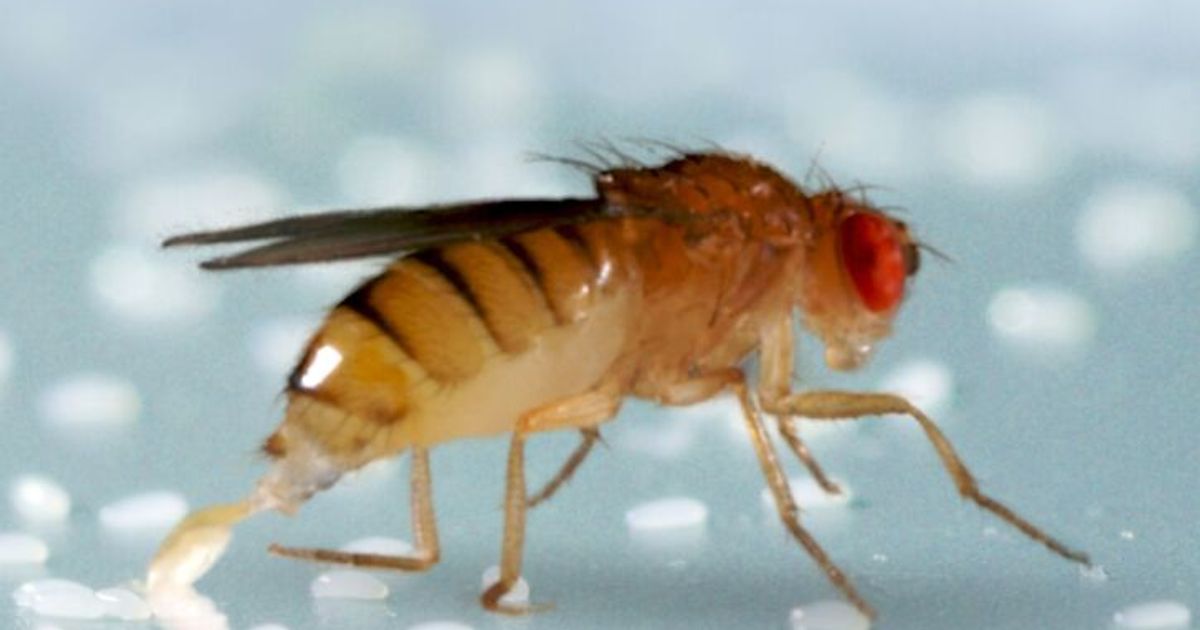
Die Artenvielfalt von Taufliegen (Drosophila) im Raum Wien ist in den vergangenen drei Jahrzehnten massiv eingebrochen. Forschende des Naturhistorischen Museums (NHM) Wien berichten, dass die Zahl der in der Stadt nachgewiesenen Arten im Vergleich zu einer Erhebung aus dem Jahr 1994 um rund 50 Prozent gesunken ist. Die Ergebnisse, die nun im Fachjournal „Ecology and Evolution“ veröffentlicht wurden, deuten darauf hin, dass vormals häufige Arten durch zugewanderte Taufliegen verdrängt worden sein könnten.
Grundlage der aktuellen Analyse ist das Citizen-Science-Projekt „Vienna City Fly“, das 2024 einfache Fliegenfallen an freiwillige Laienforscher in Wien, Niederösterreich und dem Burgenland verteilte. Die zurückgesandten Proben wurden für die nun publizierte Studie gezielt auf Fänge in unmittelbarer Nähe menschlicher Siedlungen beschränkt – also auf Innenräume, Balkone und Gärten. Damit liegt ein detailliertes Bild jener Drosophila-Gemeinschaft vor, die besonders eng an vom Menschen geprägte Lebensräume gebunden ist.
Insgesamt wurden mehr als 18.000 Taufliegen gesammelt und taxonomisch bestimmt; dabei identifizierte das Team um NHM-Forscher Martin Kapun 13 Drosophila-Arten. Bemerkenswert ist der Nachweis zweier Arten, die bislang in Österreich nicht registriert waren: Drosophila (D.) mercatorum und D. virilis. D. mercatorum ist ursprünglich in den USA, Mexiko und Südamerika verbreitet und wurde im vergangenen Jahrhundert nach Europa eingeschleppt, D. virilis stammt aus Asien und hat sich erst seit relativ kurzer Zeit über die nördliche Hemisphäre ausgebreitet.
Die Zusammensetzung der Populationen zeigt eine deutliche Verschiebung hin zu wenigen dominanten Generalisten. D. mercatorum mit rund 8.800 Nachweisen und die Modellorganismus-Art D. melanogaster mit etwa 6.700 Funden waren die mit Abstand häufigsten Spezies in den Proben. „Dominiert wird die Drosophila-Population im Wiener Stadtgebiet von Generalisten mit starker Affinität zum Menschen“, erklärte Kapun der Austria Presse Agentur zufolge. Die Ergebnisse unterstreichen, dass zunehmende Verbauung und die starke Prägung durch menschliche Siedlungen mit einem Rückgang der Biodiversität einhergehen können – auch bei unscheinbaren Insekten, die als wichtige Indikatoren für den Zustand urbaner Ökosysteme gelten.