Multi-year exclusive agreement to expand access to next-generation 3D surgical visualization worldwide
SEOUL, South Korea, June 18, 2026 /PRNewswire/ -- MediThinQ, a South Korea-based innovator in surgical visualization technologies, has entered into an exclusive multi-year distribution agreement with Synovis Micro Companies Alliance, Inc. ("Synovis MCA"), a subsidiary of Baxter International Inc. (NYSE:BAX) and trusted leader in microsurgical devices and solutions, to commercialize SHIYA, its 3D surgical visualization platform. Terms of this agreement were not disclosed.
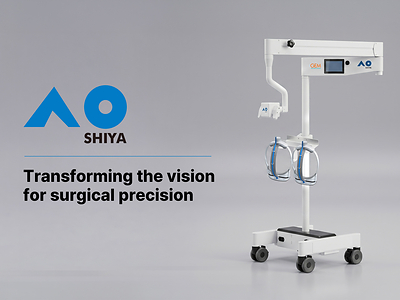
The agreement enables the global rollout of SHIYA through Synovis MCA, leveraging the company's deep-rooted expertise in microsurgery and its longstanding relationships with leading hospitals and world-renowned reconstructive surgeons. With a presence across key international markets and a reputation built over more than three decades, Synovis MCA provides a highly specialized commercial and clinical platform to accelerate adoption of SHIYA worldwide. Synovis MCA is uniquely positioned to support the continued evolution of microsurgery from conventional optical microscopes toward advanced digital visualization systems.
From Optical Constraints to Data-Enabled Surgical Environments
Surgical visualization has long depended on optical microscopes, requiring surgeons to operate through fixed eyepieces. While effective, this approach can constrain posture, limit visibility across the surgical team, and restrict how procedures are captured, analyzed, and taught.
MediThinQ developed SHIYA to address these limitations through a fully digital surgical platform. The system combines a high-resolution digital exoscope with up to 20x magnification and its proprietary wearable display, SCOPEYE, allowing surgeons to operate without reliance on traditional eyepieces.
By transitioning from optical to digital visualization, SHIYA enables a fundamental shift in how surgical data is generated and used. Unlike optical systems, where visual information is largely confined to the surgeon, digital platforms allow procedures to be captured, stored, and shared in real time. This capability is increasingly seen as foundational for the development of data-driven surgery, including applications in artificial intelligence, advanced analytics, and robotic-assisted procedures.
In parallel, the heads-up and wearable configuration supports more ergonomic surgical workflows and shared visibility across the operating team. The platform's portability and flexible deployment capabilities also address access challenges associated with conventional microscopes, which remain costly and infrastructure-intensive, particularly in resource-constrained settings.
Clinical Validation and Surgical Perspective
To date, SHIYA has been used in more than 100 procedures globally, with findings supported by peer-reviewed research. A 2025 review article published in JPRAS Open, led by Prof. Joon-pio Hong, Chief Medical Officer of MediThinQ and President of the World Society for Reconstructive Microsurgery, examined the role of digital exoscope systems in microsurgery and noted their potential to support emerging applications such as augmented and data-assisted surgical techniques.
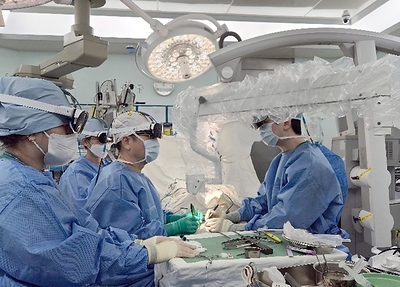
Separately, a team led by Dr. Hyung Bae Kim, Clinical Assistant Professor in the Department of Plastic Surgery at Asan Medical Center, has published a paper in Plastic and Reconstructive Surgery (PRS 2026) examining the portability and ergonomic advantages of 3D exoscopes equipped with heads-up displays – SHIYA's core offering. Their findings support the viability of such platforms as an alternative to the conventional microscope, and point to potential applications in supermicrosurgery, telemicrosurgery, as well as robotic-assisted procedures.
"Digital visualization is not simply an incremental improvement over conventional microscopes – it fundamentally changes how surgeons interact with the operative field," said Prof. Hong. "The ability to operate in a heads-up position while sharing the same visual field with the entire team has important implications for precision, training, and surgical ergonomics."
Dr. Peter Neligan, Professor Emeritus of Surgery at the University of Washington and a globally recognized leader in reconstructive microsurgery, has described SHIYA as "the future of reconstructive microsurgery."
Scaling Access to Digital Surgical Visualization
The collaboration with Synovis MCA provides commercial infrastructure capabilities to scale SHIYA globally, enabling broader adoption of digital surgical visualization across diverse healthcare systems. By leveraging Synovis MCA's deep clinical expertise in microsurgery and its trusted relationships with leading surgeons, MediThinQ is well-positioned to accelerate adoption and ensure SHIYA meets the real-world needs of complex reconstructive procedures. Rather than an immediate worldwide launch, the rollout will be phased over time, tailored carefully to specific regulatory requirements and market readiness in each respective country.

Seung Joon IM, Founder and CEO of MediThinQ, said the partnership reflects the original vision behind the company:
"MediThinQ was founded on the belief that surgeons should not be constrained by the limitations of optical systems. This agreement is an important step in making digital surgical visualization more widely accessible – so that more surgeons, in more settings, can benefit from improved ergonomics, better visibility, and new ways of working."
Michael Campbell, President of Synovis MCA, shared his perspective on the collaboration and value of SHIYA:
"We are honored to work with MediThinQ as their global partner in launching their breakthrough digital vision technology, SHIYA. SHIYA is aligned to our mission of being "the microsurgeon's most trusted resource" by delivering innovative solutions that are safer, efficient, and more effective.
We look forward to building a strong foundation of growth and value supported by our core value of trust, mutual respect, high communication and a spirit of cooperation. Together we are creating the future of microsurgery."
MediThinQ is also advancing a broader concept of "3D Surgical Intelligence" aimed at integrating visualization, data capture, and analytics into a connected surgical environment.
About MediThinQ
MediThinQ is a South Korea-based medical technology company developing proprietary imaging technologies that enable the digital transformation of operating rooms. Through its wearable display solution SCOPEYE and digital exoscope SHIYA, the company delivers immersive and ergonomic surgical environments designed to enhance precision, collaboration, and workflow efficiency. MediThinQ continues to expand its global regulatory footprint, having secured relevant product approvals in key global markets including the United States, Europe, Japan, China, South Korea, the United Kingdom, Australia, and Taiwan based on respective market configurations.
About Synovis Micro Companies Alliance, Inc.
Synovis Micro Companies Alliance, Inc. (Synovis MCA), a subsidiary of Baxter International Inc., is a leading provider of advanced technologies and devices dedicated to reconstructive microsurgery. The company's mission is to be the microsurgeon's most trusted partner by delivering innovative, high-quality solutions that support precision, efficiency, and improved patient outcomes in complex procedures. Through its globally recognized product portfolio and strong relationships with surgeons and hospitals worldwide, Synovis MCA continues to advance the field of microsurgery and enable clinicians to deliver life-enhancing care.
 View original content to download multimedia:https://www.prnewswire.co.uk/news-releases/medithinq-and-synovis-micro-companies-alliance-inc-announce-strategic-global-distribution-agreement-to-redefine-microsurgery-with-the-shiya-3d-visualization-platform-302803970.html

Die Artenvielfalt von Taufliegen (Drosophila) im Raum Wien ist in den vergangenen drei Jahrzehnten massiv eingebrochen. Forschende des Naturhistorischen Museums (NHM) Wien berichten, dass die Zahl der in der Stadt nachgewiesenen Arten im Vergleich zu einer Erhebung aus dem Jahr 1994 um rund 50 Prozent gesunken ist. Die Ergebnisse, die nun im Fachjournal „Ecology and Evolution“ veröffentlicht wurden, deuten darauf hin, dass vormals häufige Arten durch zugewanderte Taufliegen verdrängt worden sein könnten.
Grundlage der aktuellen Analyse ist das Citizen-Science-Projekt „Vienna City Fly“, das 2024 einfache Fliegenfallen an freiwillige Laienforscher in Wien, Niederösterreich und dem Burgenland verteilte. Die zurückgesandten Proben wurden für die nun publizierte Studie gezielt auf Fänge in unmittelbarer Nähe menschlicher Siedlungen beschränkt – also auf Innenräume, Balkone und Gärten. Damit liegt ein detailliertes Bild jener Drosophila-Gemeinschaft vor, die besonders eng an vom Menschen geprägte Lebensräume gebunden ist.
Insgesamt wurden mehr als 18.000 Taufliegen gesammelt und taxonomisch bestimmt; dabei identifizierte das Team um NHM-Forscher Martin Kapun 13 Drosophila-Arten. Bemerkenswert ist der Nachweis zweier Arten, die bislang in Österreich nicht registriert waren: Drosophila (D.) mercatorum und D. virilis. D. mercatorum ist ursprünglich in den USA, Mexiko und Südamerika verbreitet und wurde im vergangenen Jahrhundert nach Europa eingeschleppt, D. virilis stammt aus Asien und hat sich erst seit relativ kurzer Zeit über die nördliche Hemisphäre ausgebreitet.
Die Zusammensetzung der Populationen zeigt eine deutliche Verschiebung hin zu wenigen dominanten Generalisten. D. mercatorum mit rund 8.800 Nachweisen und die Modellorganismus-Art D. melanogaster mit etwa 6.700 Funden waren die mit Abstand häufigsten Spezies in den Proben. „Dominiert wird die Drosophila-Population im Wiener Stadtgebiet von Generalisten mit starker Affinität zum Menschen“, erklärte Kapun der Austria Presse Agentur zufolge. Die Ergebnisse unterstreichen, dass zunehmende Verbauung und die starke Prägung durch menschliche Siedlungen mit einem Rückgang der Biodiversität einhergehen können – auch bei unscheinbaren Insekten, die als wichtige Indikatoren für den Zustand urbaner Ökosysteme gelten.