Integrated Suite of Six Advanced Solutions Elevates Display, Infotainment, Entertainment and Connectivity for a More Seamless, Immersive In-Cabin Experience
News Summary
SEOUL, South Korea, Oct. 8, 2026 /PRNewswire/ -- LG Electronics (LG), a leader in mobility innovation, is bringing a suite of advanced in-cabin solutions to the GV90, the first full-size flagship SUV from Genesis, the luxury vehicle brand of Hyundai Motor Group. Spanning display, infotainment, content and connectivity, LG's technologies for the GV90 support a premium in-car experience for drivers and passengers.
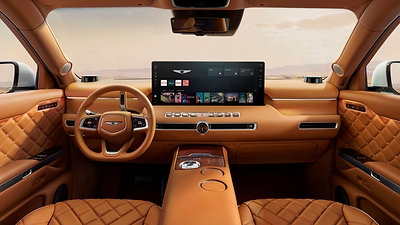
This suite of six solutions includes the variable popup display system, integrated infotainment system and LG Automotive Content Platform (ACP), as well as the connected car Rear Cockpit (ccRC) rear-seat entertainment system, console touch screen (CTS) and central communication unit (CCU) 2.0.
Enhanced Cockpit Experience with Variable Display and Integrated Infotainment
At the heart of the GV90 cockpit is LG's 24.6-inch variable popup central information display (CID) system, the first of its kind to be deployed in a Genesis model. The display system adapts to the use scenario, adjusting position and viewable area to help make driving more intuitive, and entertainment more immersive and convenient.
When the focus is driving, the display maintains a lower profile with a visible screen of 23.6 inches, uniting the audio, video and navigation (AVN) system and instrument cluster for at-a-glance readability and easy control. For stationary use, the screen rises by an additional 90mm, expanding to a 24.6-inch size for a more immersive range of entertainment content.
Complementing this adaptive display innovation is LG's integrated infotainment system – embedded in Hyundai Motor Group's Pleos Connect – which serves as the central hub for the GV90 cockpit. In addition to bringing together the cluster, AVN and head-up display (HUD), it supports the delivery of Pleos Connect OS and Gleo AI voice assistant service. Optimized for the variable popup display system, its user experience (UX) design and graphical user interface (GUI) provide seamless control of various in-vehicle functions.
Expanding the In-Vehicle Content and Digital Services Ecosystem
Additionally, the Genesis GV90 features LG ACP, delivering content experiences tailored to the in-vehicle environment. The platform gives occupants access to a growing lineup of entertainment and digital services, spanning streaming and communication. Passengers can watch their favorite content on the vehicle's infotainment display,* from services such as Netflix, Disney+, YouTube, TVING, Baby Shark World for Kids and Haystack News, as well as LG Channels, LG's free ad-supported streaming TV service. New additions planned for LG ACP include Zoom, Rakuten TV and HappyKids, with availability subject to regional launch schedules.
Enhancing Rear-Seat Entertainment, Convenience and Connectivity
LG's in-cabin technologies also enhance the GV90 rear-seat passenger experience. The GV90 features the second-generation ccRC, a rear-seat entertainment system equipped with a 13.2-inch, touch-sensitive OLED panel. Integrated with LG ACP, ccRC provides vivid image quality and a range of content and services to help transform the back of the cabin into a private theater or lounge.
An eight-inch CTS further elevates convenience by serving as a touch-based control interface for diverse vehicle functions, including HVAC, doors, seats, lighting, media and massage. CTS also features haptic feedback and supports cybersecurity capabilities and over-the-air (OTA) updates.
Behind these experiences is LG's CCU 2.0, an integrated control unit that enables communication between the GV90's key electronic control units (ECUs) and connectivity to external networks. It supports essential vehicle services, including remote control and OTA updates, and has obtained certification from TÜV Rheinland, a global testing, inspection and certification agency, for compliance with ASIL-D requirements under the ISO 26262 international standard for automotive functional safety.
Advancing Integrated In-Cabin Experiences
The LG technologies featured in the GV90 demonstrate how the company's expertise extends across multiple areas of the cabin, from cockpit and rear-seat infotainment to vehicle control and connectivity. The deployment underscores LG's growing role in supporting global automakers to deliver next-generation vehicle environments.
"By combining our capabilities in display, infotainment, content platform and vehicle control technologies, we are helping provide more seamless and intuitive experiences for drivers and passengers," said Eun Seok-hyun, president of the LG Vehicle Solution Company. "We will continue to advance our integrated in-cabin solutions to help shape the future of in-vehicle experiences."
* An automotive data plan is required to access streaming services. Access to certain apps may require a separate subscription. |
About LG Electronics Vehicle Solution Company
The LG Vehicle Solution Company (VS) is bringing LG's unique mobility innovations to the automotive industry. As a trusted and innovative partner, the company provides intelligent solutions including head units, displays, connectivity, ADAS vision systems, and software solutions integrating human-centered AI and automotive engineering into the modern AI/software-defined vehicle. Committed to "Driving better future mobility," the company has diversified its portfolio to further strengthen its capabilities, including automotive lighting systems, e-powertrain and cybersecurity. For more information, visit www.LG.com/global/mobility. To stay updated with the latest news, subscribe to the LG mobility newsletter, LG Loop at www.LG.com/global/mobility/newsletter and follow the LG VS Company LinkedIn channel at www.linkedin.com/company/lgvehiclesolution.
 View original content to download multimedia:https://www.prnewswire.co.uk/news-releases/lg-electronics-brings-integrated-next-generation-vehicle-solutions-to-genesis-gv90-302902009.html

Mercedes-Benz verzeichnet ein zunehmend zweigeteiltes Bild seiner weltweiten Fahrzeugverkäufe. Während die Konzernzahlen im dritten Quartal 2026 global rückläufig waren, meldet die Indien-Tochter ein Rekordquartal. In Indien setzte Mercedes-Benz im Zeitraum Juli bis September 5.422 Fahrzeuge ab, ein Plus von 6 Prozent gegenüber dem Vorjahr und zugleich der beste Quartalswert in der Geschichte des Unternehmens im Land. Von Januar bis September summierten sich die Verkäufe dort auf 15.190 Einheiten, rund 8 Prozent mehr als im entsprechenden Vorjahreszeitraum.
Auf Konzernebene dagegen schrumpften die Auslieferungen im gleichen Quartal. Weltweit setzte Mercedes-Benz 491.700 Pkw und leichte Nutzfahrzeuge ab, ein Minus von 6 Prozent im Vergleich zum Vorjahr. Im Pkw-Geschäft allein sanken die globalen Verkäufe um 8 Prozent auf 407.200 Einheiten. Besonders belastend wirkte die Entwicklung in Asien und hier vor allem in China: In der Volksrepublik gingen die Pkw-Verkäufe um knapp ein Drittel auf 86.800 Fahrzeuge zurück, konzernweit meldete der Hersteller für Asien ein Minus von 25 Prozent auf 132.300 Autos. Ein Zuwachs in Europa und Nordamerika reichte nicht aus, um die Schwäche in China zu kompensieren.
Kontrastreich präsentiert sich auch das Bild in den oberen Preissegmenten. In Indien trugen Top-End-Luxusmodelle – darunter S‑Klasse, Mercedes‑Maybach, EQS Maybach SUV, G‑Klasse, V‑Klasse und AMG‑Modelle – maßgeblich zum Wachstum bei: Diese Klasse legte dort im Jahresvergleich um mehr als 13 Prozent zu und kam auf über ein Viertel des Gesamtabsatzes. Innerhalb dieses Segments nutzten laut Unternehmen fast drei Viertel der Kunden das MANUFAKTUR‑Personalisierungsprogramm. Die Performance-Marke AMG steigerte ihre Auslieferungen in Indien um mehr als 18 Prozent, das AMG G 63 erzielte den höchsten monatlichen Absatz seit Markteinführung. Global hingegen verzeichnete Mercedes-Benz im teuersten Segment aus S‑Klasse, Maybach und AMG ein deutliches Minus von gut 20 Prozent im dritten Quartal.
Stärker als die Verbrenner legten weltweit die batterieelektrischen Modelle zu. Vertriebs- und Marketingvorstand Mathias Geisen sprach von dem höchsten Quartalsabsatz vollelektrischer Pkw in der Unternehmensgeschichte; in Europa war nahezu jedes dritte verkaufte Auto rein elektrisch. Der elektrische GLC trug dabei überproportional zum Wachstum bei und vervielfachte seine Verkäufe gegenüber dem zweiten Quartal. In Indien setzt der Konzern seinen Fokus ebenfalls auf Elektrifizierung: Dort stehen die Markteinführung einer elektrifizierten S‑Klasse mit Auslieferungsstart Mitte Oktober sowie die Premiere des GLC BEV Anfang November an, die das Portfolio am Subkontinent weiter ausbauen sollen.
Die Transportersparte Vans erwies sich zuletzt als Stabilitätsanker. Mit einem Plus von 1 Prozent auf 84.400 Fahrzeuge hielt sich das Segment im dritten Quartal nahezu auf Vorjahresniveau. Insgesamt aber bleibt der Druck auf das Kerngeschäft hoch, da der Wettbewerb im wichtigen Markt China nach Konzernangaben intensiv und das Umfeld weiterhin schwierig ist. In dem Land gehören der GLC und die E‑Klasse zu den meistverkauften Baureihen des Herstellers und machen dort fast zwei Drittel der Pkw-Verkäufe aus. Die anhaltende Schwäche in China, die bereits im zweiten Quartal mit einem Absatzminus von rund 30 Prozent sichtbar war, unterstreicht für Mercedes-Benz die Bedeutung eines breiter diversifizierten Wachstums – mit Märkten wie Indien, in denen das Premium- und Luxusgeschäft derzeit gegensätzlich zum Trend zulegt.