LG Presents Its Euro NCAP-Aligned Integrated V2X-V2N Safety Platform and Joins Global Industry Leaders in Pursuing a Zero-Accident Society
News Summary
SEOUL, South Korea, Oct. 20, 2026 /PRNewswire/ -- LG Electronics (LG) is advancing its vision for the future of mobility safety at the 2026 Intelligent Transport Systems (ITS) World Congress, taking place from October 19 to 23 in Gangneung, South Korea. Held under the theme "Beyond Mobility, Connected World," the five-day event brings together government officials, industry leaders and experts to explore the future of smart mobility and intelligent transportation systems.
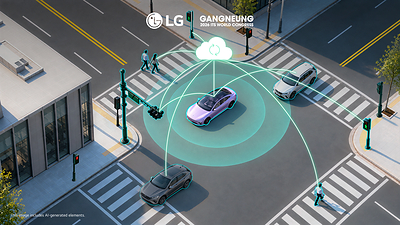
At the congress, LG is highlighting the automotive industry's shift from a vehicle-centric safety model toward a cooperative approach to accident prevention, in which vehicles, people, infrastructure and networks work together. Through technical presentations, industry sessions and live demonstrations, the company is showcasing connected safety technologies and their potential to contribute to a safer, more connected mobility ecosystem.
Moving Beyond Connectivity to Cooperative Safety
With the automotive industry accelerating toward software-defined vehicles (SDVs) and automated driving, safety systems that rely primarily on onboard sensors face limitations in detecting hazards beyond a vehicle's immediate surroundings. Cooperative safety technologies enable vehicles to exchange real-time information with other road users and surrounding infrastructure, helping improve the detection of potential hazards.
At the 2026 ITS World Congress, LG is demonstrating how its Soft V2X-based connected safety platform combines direct vehicle-to-everything (V2X) communications with cloud-based vehicle-to-network (V2N) connectivity. Soft V2X is LG's integrated cooperative safety platform that connects vehicles, networks and infrastructure in real time. The demonstration features cooperative safety scenarios aligned with the European New Car Assessment Programme (Euro NCAP).
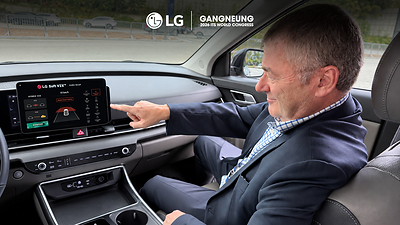
Under the theme "Seamless V2X-V2N Intelligence for NCAP-Ready Safety," LG is conducting live on-road demonstrations near the congress venue from October 20 to 22. Using a vehicle equipped with LG telematics hardware, V2X-enabled devices and a pedestrian mobile application, the demonstration illustrates how connected safety technologies can identify potential risks at obstructed intersections, detect approaching pedestrians and cyclists, and provide early warnings of hazards beyond the driver's line of sight.
The platform combines Soft V2X-based end-to-end message security, predictive quality of service (QoS)-enabled intelligent orchestration of V2X and V2N communications, and a V2N server built on standards from the 5G Automotive Association (5GAA) and ITS Korea. Together, these technologies enhance the reliability of safety-critical messages and help maintain service continuity.
By integrating vehicles, communication networks, cloud services and transportation infrastructure, LG's solution extends beyond conventional V2X technology. It enables vehicles and nearby infrastructure to collectively identify and respond to potential hazards, advancing a cooperative approach to safety beyond traditional vehicle-centric systems.
Advancing Global Collaboration Toward a Zero-Accident Society
Beyond technology development, LG is joining representatives from Toyota and regional ITS associations around the world at the "Toward Building a Zero-Accident Society" session to explore opportunities for global collaboration on reducing traffic accidents and accelerating the adoption of cooperative-V2X technologies.
During the session, LG will share insights from its global validation initiatives and showcase cooperative-V2X applications designed to address evolving Euro NCAP safety requirements. The participants will also make a joint declaration to encourage broader industry collaboration and advance the development and adoption of cooperative safety technologies.
The declaration underscores the importance of a cooperative safety framework connecting vehicles, people, infrastructure and communication networks. Key priorities include expanding the capabilities of SDV architectures, enhancing over-the-air (OTA)-enabled services, accelerating cooperative-V2X adoption and strengthening alignment with NCAP safety frameworks.
Reinforcing Connected Safety Through Innovation and Standardization
LG is highlighting the capabilities of its Soft V2X technology through two special sessions focused on the future of connected mobility, one held on October 19 and the other scheduled for October 22.
At the "V2X Technologies for Hyper Connected Mobility Service" session, held on October 19, LG joined the Korea Electronics Technology Institute (KETI), the Electronics and Telecommunications Research Institute (ETRI) and Sungkyunkwan University for a panel discussion on the future of the V2X ecosystem. LG shared its perspective on advancing V2N and hybrid V2X standardization to facilitate global commercialization.
In the "Global Connectivity Solutions to Support Connected and Automated Driving" session, scheduled for October 22, LG will present V2N service applications for global automakers and outline its approach to advancing connected safety technologies for future transportation environments. The company will also share its vision for next-generation safety services powered by AI and digital infrastructure, illustrating the potential of an integrated mobility ecosystem spanning vehicles, networks, cloud platforms and transportation infrastructure.
"Reducing traffic accidents requires more than improving the safety performance of individual vehicles," said Lee Sang-yong, head of the VS R&D Laboratory at the LG Vehicle Solution Company. "By connecting vehicles, people, infrastructure and networks through cooperative safety technologies, LG aims to help build a safer mobility ecosystem and contribute to the realization of a Zero-Accident Society."
1) Based on LG's internal research using publicly available information as of October 2026. |
About LG Electronics Vehicle Solution Company
The LG Vehicle Solution Company (VS) is bringing LG's unique mobility innovations to the automotive industry. As a trusted and innovative partner, the company provides intelligent solutions including head units, displays, connectivity, ADAS vision systems, and software solutions integrating human-centered AI and automotive engineering into the modern AI/software-defined vehicle. Committed to "Driving better future mobility," the company has diversified its portfolio to further strengthen its capabilities, including automotive lighting systems, e-powertrain and cybersecurity. For more information, visit www.LG.com/global/mobility. To stay updated with the latest news, subscribe to the LG mobility newsletter, LG Loop at www.LG.com/global/mobility/newsletter and follow the LG VS Company LinkedIn channel at www.linkedin.com/company/lgvehiclesolution.
 View original content to download multimedia:https://www.prnewswire.co.uk/news-releases/lg-electronics-advances-cooperative-safety-vision-at-2026-its-world-congress-302913311.html

Vorarlbergs Landeshauptmann Markus Wallner (ÖVP) hat die innenpolitische Debatte über den Umgang mit Jugendkriminalität und die Ausgestaltung des Sozialsystems neu angeheizt. In der ORF-„Pressestunde“ brachte der Vorsitzende der Landeshauptleutekonferenz die seit Jahren umstrittene Forderung seiner Partei erneut auf den Tisch, die Strafmündigkeit in Österreich von derzeit 14 auf zwölf Jahre zu senken. „Wer früh Grenzen übertritt, der muss auch damit rechnen, dass früh Grenzen aufgezeigt werden“, sagte Wallner. Allein mit Strafrecht sei es aus seiner Sicht jedoch nicht getan; parallel brauche es ein „Netz an verpflichtenden Unterstützungen“ für betroffene Kinder und Familien.
Zur Begründung verwies Wallner auf Entwicklungen in Schweden. Dort werde über Gefängnisstrafen für 13-Jährige diskutiert, nachdem Berichte über Jugendliche kursierten, die von erwachsenen Tätern für Straftaten instrumentalisiert werden sollen. Eine „Situation wie in den Vororten Stockholms“ wolle er in Österreich verhindern, so der Landeshauptmann, der betonte, er wolle „nicht den Teufel an die Wand malen“, aber vor Fehlentwicklungen warnen. Die ÖVP hatte bereits 2024, unter anderem nach Fällen von Jugendkriminalität, eine Absenkung der Strafmündigkeit gefordert; damals war Innenminister Gerhard Karner treibende Kraft der Debatte.
In der früheren schwarz-grünen Koalition konnte sich die Volkspartei mit dieser Linie nicht durchsetzen. „Mit den Grünen war das aber praktisch unmöglich“, sagte Wallner rückblickend. Aus den Reihen der Grünen kam auch diesmal umgehend Widerspruch. Die grüne Sicherheitssprecherin Agnes Sirkka Prammer bezeichnete es als „Scheinlösung“, Zwölfjährigen mit dem Strafrecht zu begegnen, und plädierte für einen Schwerpunkt auf Prävention: Kinder- und Jugendhilfe, Familienarbeit, Schulsozialarbeit und psychologische Unterstützung müssten ausgebaut werden. Die Länder seien gefordert, dafür ausreichend Ressourcen bereitzustellen.
Parallel zu der Sicherheitsdebatte positionierte sich Wallner bei der anstehenden Neuordnung der Sozialhilfe, einem der zentralen Themen, über die sich die Bundesregierung im Herbst verständigen will. Die Verhandlungen laufen bereits, in der kommenden Woche sollen sie fortgesetzt werden. Wallner betonte, es brauche „eine Sozialhilfe, die Armut verhindert“, warnte aber zugleich vor einer möglichen „Zuwanderung ins System“ und forderte klare Wartefristen für Asylberechtigte. Die Reform müsse auf eine möglichst kurze Bezugsdauer abzielen; Vorarlberg sei hier, was die Dauer des Sozialhilfebezugs betreffe, Vorreiter.
Bei den Leistungen spricht sich Wallner für eine Obergrenze aus. „Ohne Obergrenze wird es nicht gehen“, sagte er mit Blick auf die Gesamtsumme, die ein Haushalt aus der Sozialhilfe beziehen kann. Auch gestaffelte Kinderregelsätze seien aus seiner Sicht notwendig. Jedes Kind sei „gleich viel wert“, aber die Kosten verdreifachten sich nicht automatisch bei drei Kindern, argumentierte der Landeshauptmann. Die neue Sozialhilfe soll nach aktueller Planung mit 1. Jänner 2027 in Kraft treten. Ob der enge Zeitplan hält, ließ Wallner offen, fügte aber hinzu: „Wenn man will, schon“ – und appellierte daran, die Bundesländer „möglichst schnell an den Tisch zu holen“.