HANNOVER, Germany, Sept. 14, 2026 /PRNewswire/ -- Kia Corporation (Kia) today unveiled the Kia PV7 at IAA Transportation 2026 in Hannover, Germany. The second model in Kia's dedicated, all-electric Platform Beyond Vehicle (PBV) lineup, the PV7 expands the brand's offering in the light commercial vehicle (LCV) segment.
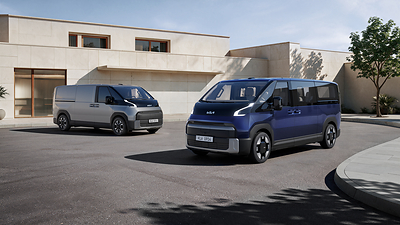
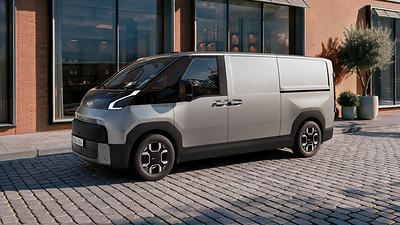
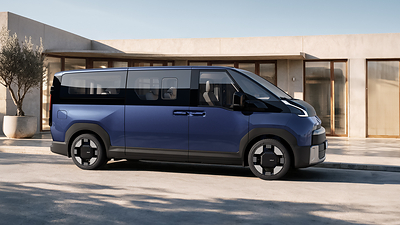
Available in Cargo and Passenger variants, the PV7 combines electric performance, flexible interior space and connected technology to support a wide range of business and mobility applications. Built on Kia's PBV-dedicated E-GMP.S architecture, it features a flat-floor design that maximizes interior space and flexibility, along with productivity-focused solutions that help customers achieve greater productivity in their day-to-day operations and drive stronger business outcomes. Kia will launch the PV7 in Korea and Europe in 2027, with additional derivatives and markets to follow.
"The PV7 marks the next step in our journey toward personalized mobility, building on the foundation established by the PV5," said Ho Sung Song, President and CEO at Kia. "By bringing together hardware developed for specific applications, business-tailored software and dedicated PBV services, the PV7 goes beyond the vehicle itself to deliver a complete business solution that helps customers achieve greater productivity, flexibility and long-term value."
How does the PV7 advance Kia's PBV strategy?
Building on the foundation established by the PV5, named the 2026 International Van of the Year, the PV7 expands the scale and scope of Kia's PBV offering. Its larger dimensions and broader application potential enable Kia to serve a wider range of customer needs, from fleet, logistics and shuttle operations to small- and medium-sized businesses and personal mobility. Kia's PV7 strategy is built around three business-focused pillars: hardware, software and service.
At the hardware level, the PV7 is built on Kia's PBV-dedicated E-GMP.S architecture, leveraging Kia's proven EV expertise and Flexible Body System[1] to support a wide range of body styles, derivatives and conversion models tailored to diverse operational needs. This comprehensive lineup enables the PV7 to serve as a business-tailored tool, providing customers with the flexibility to adapt the vehicle to their specific operational requirements.
At the software level, Kia provides the Kia Business Solutions Portal, which supports fleet management, charging, maintenance and daily operations. Standardized Fleet Management System (FMS) and connected vehicle data APIs tailored to customers' operational needs help improve fleet visibility and support more efficient day-to-day operations.
In addition, Kia offers dedicated Uptime services that support vehicle availability through real-time monitoring, predictive diagnostics and proactive maintenance management. Together, these connected solutions are designed to reduce operational disruption and support Kia's commitment to service excellence.
Kia's business-tailored service is centered on PBV-dedicated services designed to provide tailored support across diverse business operations, lower total cost of ownership and support higher vehicle uptime. Kia plans to expand the PV7 lineup to 23 variants following its 2027 launch, with the PV9 set to follow in 2029, further broadening the brand's PBV lineup and mobility solutions.
"The PV7 has been developed to give customers the flexibility to adapt as needs evolve," said Sangdae Kim, Executive Vice President and Head of Kia's PBV Business Division. "As a business-tailored tool engineered to deliver best-in-class EV performance, data-driven solutions, and total service excellence, it will enable customers to improve work efficiency, enhance productivity, and create greater value throughout the business lifecycle."
-ENDS-
Visit Kia Global Newsroom for more Kia content
For more information, visit the Kia Global Brand Site or Kia Global Newsroom. Follow our Kia Global Newsroom Instagram channel @kia.globalnews and LinkedIn account @Kia Global News
[1] Flexible Body System (FBS) is Kia's next-generation modular body architecture that enables the flexible development of diverse body styles and derivatives from a standardized vehicle structure. |
 View original content to download multimedia:https://www.prnewswire.co.uk/news-releases/kia-pv7-expands-all-electric-pbv-lineup-with-greater-capacity-and-flexibility-302877451.html

Mercedes-Benz verzeichnet ein zunehmend zweigeteiltes Bild seiner weltweiten Fahrzeugverkäufe. Während die Konzernzahlen im dritten Quartal 2026 global rückläufig waren, meldet die Indien-Tochter ein Rekordquartal. In Indien setzte Mercedes-Benz im Zeitraum Juli bis September 5.422 Fahrzeuge ab, ein Plus von 6 Prozent gegenüber dem Vorjahr und zugleich der beste Quartalswert in der Geschichte des Unternehmens im Land. Von Januar bis September summierten sich die Verkäufe dort auf 15.190 Einheiten, rund 8 Prozent mehr als im entsprechenden Vorjahreszeitraum.
Auf Konzernebene dagegen schrumpften die Auslieferungen im gleichen Quartal. Weltweit setzte Mercedes-Benz 491.700 Pkw und leichte Nutzfahrzeuge ab, ein Minus von 6 Prozent im Vergleich zum Vorjahr. Im Pkw-Geschäft allein sanken die globalen Verkäufe um 8 Prozent auf 407.200 Einheiten. Besonders belastend wirkte die Entwicklung in Asien und hier vor allem in China: In der Volksrepublik gingen die Pkw-Verkäufe um knapp ein Drittel auf 86.800 Fahrzeuge zurück, konzernweit meldete der Hersteller für Asien ein Minus von 25 Prozent auf 132.300 Autos. Ein Zuwachs in Europa und Nordamerika reichte nicht aus, um die Schwäche in China zu kompensieren.
Kontrastreich präsentiert sich auch das Bild in den oberen Preissegmenten. In Indien trugen Top-End-Luxusmodelle – darunter S‑Klasse, Mercedes‑Maybach, EQS Maybach SUV, G‑Klasse, V‑Klasse und AMG‑Modelle – maßgeblich zum Wachstum bei: Diese Klasse legte dort im Jahresvergleich um mehr als 13 Prozent zu und kam auf über ein Viertel des Gesamtabsatzes. Innerhalb dieses Segments nutzten laut Unternehmen fast drei Viertel der Kunden das MANUFAKTUR‑Personalisierungsprogramm. Die Performance-Marke AMG steigerte ihre Auslieferungen in Indien um mehr als 18 Prozent, das AMG G 63 erzielte den höchsten monatlichen Absatz seit Markteinführung. Global hingegen verzeichnete Mercedes-Benz im teuersten Segment aus S‑Klasse, Maybach und AMG ein deutliches Minus von gut 20 Prozent im dritten Quartal.
Stärker als die Verbrenner legten weltweit die batterieelektrischen Modelle zu. Vertriebs- und Marketingvorstand Mathias Geisen sprach von dem höchsten Quartalsabsatz vollelektrischer Pkw in der Unternehmensgeschichte; in Europa war nahezu jedes dritte verkaufte Auto rein elektrisch. Der elektrische GLC trug dabei überproportional zum Wachstum bei und vervielfachte seine Verkäufe gegenüber dem zweiten Quartal. In Indien setzt der Konzern seinen Fokus ebenfalls auf Elektrifizierung: Dort stehen die Markteinführung einer elektrifizierten S‑Klasse mit Auslieferungsstart Mitte Oktober sowie die Premiere des GLC BEV Anfang November an, die das Portfolio am Subkontinent weiter ausbauen sollen.
Die Transportersparte Vans erwies sich zuletzt als Stabilitätsanker. Mit einem Plus von 1 Prozent auf 84.400 Fahrzeuge hielt sich das Segment im dritten Quartal nahezu auf Vorjahresniveau. Insgesamt aber bleibt der Druck auf das Kerngeschäft hoch, da der Wettbewerb im wichtigen Markt China nach Konzernangaben intensiv und das Umfeld weiterhin schwierig ist. In dem Land gehören der GLC und die E‑Klasse zu den meistverkauften Baureihen des Herstellers und machen dort fast zwei Drittel der Pkw-Verkäufe aus. Die anhaltende Schwäche in China, die bereits im zweiten Quartal mit einem Absatzminus von rund 30 Prozent sichtbar war, unterstreicht für Mercedes-Benz die Bedeutung eines breiter diversifizierten Wachstums – mit Märkten wie Indien, in denen das Premium- und Luxusgeschäft derzeit gegensätzlich zum Trend zulegt.