In an extension of ongoing collaboration, IBM and Lockheed Martin plan to initiate research projects with select Swiss academic institutions.
The Swiss National Supercomputing Centre at ETH Zurich will host an IBM Quantum System Two, expanding access across Swiss institutions to fuel the country's quantum ecosystem, research and workforce education.
ZURICH, Sept. 10, 2026 /PRNewswire/ -- IBM (NYSE: IBM) and Lockheed Martin (NYSE: LMT), through an offset agreement with armasuisse, Switzerland's Federal Office for Defence Procurement, today established a hub for quantum innovation at ETH Zurich, a prominent public research university. The new hub plans to host the country's first IBM Quantum System Two at the Swiss National Supercomputing Center (CSCS) in Lugano.
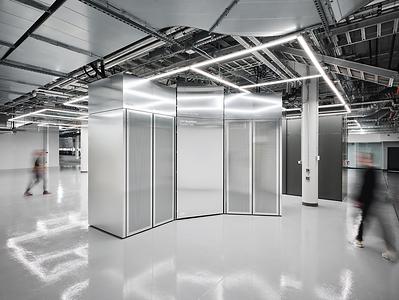
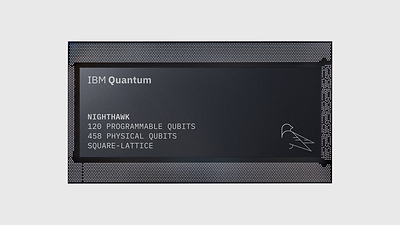
IBM will operate the IBM Quantum System Two, which will be powered by an IBM Quantum Nighthawk, the company's most advanced processor. ETH Zurich will provide expertise, resources and technologies for Swiss industries, startups and academia, including access to the quantum computer. Its delivery is expected to catalyze the development of new algorithms, technical breakthroughs, and industrial use cases, as well as anchor initiatives to foster Switzerland's workforce and talent. The project also advances the ongoing strategic collaboration between Lockheed Martin and IBM, combining Lockheed Martin innovations in quantum sensing and additive manufacturing with IBM's expertise in quantum computing and AI.
"Switzerland is deservedly recognized as a hub for global innovation, and Lockheed Martin is proud of its long history of technical collaboration within the country," said Dr. Craig Martell, Lockheed Martin vice president and chief technology officer. "This project extends the strategic relationship between Lockheed Martin and IBM in quantum and AI while positioning Switzerland as a leader in these critical, cutting-edge fields. It provides resources and expertise, develops skills and enables joint research across the Swiss commercial, defense and academic ecosystem."
"IBM has collaborated with institutions in Switzerland for almost 100 years. Our research team at our Zurich lab has led fundamental technology breakthroughs for the world and has been part of the country's science ecosystem for decades," said Alessandro Curioni, vice president, Algorithms and Applications, IBM Research and director of the Zurich Research Laboratory. "As we continue to foster innovation with the Swiss community, we are excited to have the opportunity to put world-class quantum hardware, software and expertise directly into the hands of Switzerland's thriving academic institutions and industries."
"Switzerland will gain access to essential research infrastructure that will enable us to further advance the exploration of this emerging technology and educate the talent needed to support it," said ETH Zurich President Joël Mesot, emphasizing the opportunities the new quantum computer will bring to Switzerland.
Delivering quantum to the Swiss ecosystem
Organizations that join the innovation hub through ETH Zurich will have immediate access to these resources and IBM's fleet of quantum computers available over the cloud. Additionally, upon the system's deployment by the end of 2026, ETH Zurich will provide organizations with access to Switzerland's own dedicated IBM Quantum System Two. These capabilities will enable the country's community of innovators to accelerate scientific and industrial research and build new use cases across chemistry, materials science, optimization, financial services and more. Today, IBM quantum computers are already delivering scientific value across the globe as useful tools in these fields.
IBM and Lockheed Martin expand joint research initiatives
As part of the collaboration, two planned joint development projects between IBM and Lockheed Martin include the exploration of quantum sensing applications for navigation and the improvement of additive manufacturing of metallic alloys. These projects also complement ongoing efforts by IBM and Lockheed Martin across a range of advanced technologies focused on aerospace and defense innovation.
IBM and ETH Zurich build on a legacy of collaboration
This initiative also builds upon a close and long-standing collaboration between IBM and ETH Zurich, including a recently launched 10-year effort to advance foundational algorithmic research.
The quantum education and workforce development effort includes providing the Swiss ecosystem with access to the IBM Quantum Network and IBM Quantum Platform learning offerings, including coursework, certifications, and workshops; as well as event support, such as hackathons, conferences, and partner forums.
About IBM
IBM is a leading provider of global hybrid cloud and AI, and consulting expertise. We help clients in more than 175 countries capitalize on insights from their data, streamline business processes, reduce costs and gain the competitive edge in their industries. Thousands of governments and corporate entities in critical infrastructure areas such as financial services, telecommunications and healthcare rely on IBM's hybrid cloud platform and Red Hat OpenShift to affect their digital transformations quickly, efficiently and securely. IBM's breakthrough innovations in AI, quantum computing, industry-specific cloud solutions and consulting deliver open and flexible options to our clients. All of this is backed by IBM's long-standing commitment to trust, transparency, responsibility, inclusivity and service.
Visit www.ibm.com for more information.
About Lockheed Martin
Lockheed Martin is a global defense technology company driving innovation and advancing scientific discovery. Our all-domain mission solutions and 21st Century Security® vision accelerate the delivery of transformative technologies to ensure those we serve always stay ahead of ready. More information at Lockheedmartin.com.
Media contacts:
Chris Nay
IBM Communications
cnay@us.ibm.com
Stephen Funk
IBM DACH Communications
+41-58 333 78 68
stephen.funk@ch.ibm.com
Trent Perrotto
Communications Director, Technology Transformation and Innovation, Lockheed Martin
trent.perrotto@lmco.com
O: 301-581-7005 | M: 321-272-8027

 View original content to download multimedia:https://www.prnewswire.co.uk/news-releases/ibm-lockheed-martin-announce-swiss-quantum-innovation-hub-at-eth-zurich-anchored-by-switzerlands-first-ibm-quantum-computer-302874482.html

Mercedes-Benz verzeichnet ein zunehmend zweigeteiltes Bild seiner weltweiten Fahrzeugverkäufe. Während die Konzernzahlen im dritten Quartal 2026 global rückläufig waren, meldet die Indien-Tochter ein Rekordquartal. In Indien setzte Mercedes-Benz im Zeitraum Juli bis September 5.422 Fahrzeuge ab, ein Plus von 6 Prozent gegenüber dem Vorjahr und zugleich der beste Quartalswert in der Geschichte des Unternehmens im Land. Von Januar bis September summierten sich die Verkäufe dort auf 15.190 Einheiten, rund 8 Prozent mehr als im entsprechenden Vorjahreszeitraum.
Auf Konzernebene dagegen schrumpften die Auslieferungen im gleichen Quartal. Weltweit setzte Mercedes-Benz 491.700 Pkw und leichte Nutzfahrzeuge ab, ein Minus von 6 Prozent im Vergleich zum Vorjahr. Im Pkw-Geschäft allein sanken die globalen Verkäufe um 8 Prozent auf 407.200 Einheiten. Besonders belastend wirkte die Entwicklung in Asien und hier vor allem in China: In der Volksrepublik gingen die Pkw-Verkäufe um knapp ein Drittel auf 86.800 Fahrzeuge zurück, konzernweit meldete der Hersteller für Asien ein Minus von 25 Prozent auf 132.300 Autos. Ein Zuwachs in Europa und Nordamerika reichte nicht aus, um die Schwäche in China zu kompensieren.
Kontrastreich präsentiert sich auch das Bild in den oberen Preissegmenten. In Indien trugen Top-End-Luxusmodelle – darunter S‑Klasse, Mercedes‑Maybach, EQS Maybach SUV, G‑Klasse, V‑Klasse und AMG‑Modelle – maßgeblich zum Wachstum bei: Diese Klasse legte dort im Jahresvergleich um mehr als 13 Prozent zu und kam auf über ein Viertel des Gesamtabsatzes. Innerhalb dieses Segments nutzten laut Unternehmen fast drei Viertel der Kunden das MANUFAKTUR‑Personalisierungsprogramm. Die Performance-Marke AMG steigerte ihre Auslieferungen in Indien um mehr als 18 Prozent, das AMG G 63 erzielte den höchsten monatlichen Absatz seit Markteinführung. Global hingegen verzeichnete Mercedes-Benz im teuersten Segment aus S‑Klasse, Maybach und AMG ein deutliches Minus von gut 20 Prozent im dritten Quartal.
Stärker als die Verbrenner legten weltweit die batterieelektrischen Modelle zu. Vertriebs- und Marketingvorstand Mathias Geisen sprach von dem höchsten Quartalsabsatz vollelektrischer Pkw in der Unternehmensgeschichte; in Europa war nahezu jedes dritte verkaufte Auto rein elektrisch. Der elektrische GLC trug dabei überproportional zum Wachstum bei und vervielfachte seine Verkäufe gegenüber dem zweiten Quartal. In Indien setzt der Konzern seinen Fokus ebenfalls auf Elektrifizierung: Dort stehen die Markteinführung einer elektrifizierten S‑Klasse mit Auslieferungsstart Mitte Oktober sowie die Premiere des GLC BEV Anfang November an, die das Portfolio am Subkontinent weiter ausbauen sollen.
Die Transportersparte Vans erwies sich zuletzt als Stabilitätsanker. Mit einem Plus von 1 Prozent auf 84.400 Fahrzeuge hielt sich das Segment im dritten Quartal nahezu auf Vorjahresniveau. Insgesamt aber bleibt der Druck auf das Kerngeschäft hoch, da der Wettbewerb im wichtigen Markt China nach Konzernangaben intensiv und das Umfeld weiterhin schwierig ist. In dem Land gehören der GLC und die E‑Klasse zu den meistverkauften Baureihen des Herstellers und machen dort fast zwei Drittel der Pkw-Verkäufe aus. Die anhaltende Schwäche in China, die bereits im zweiten Quartal mit einem Absatzminus von rund 30 Prozent sichtbar war, unterstreicht für Mercedes-Benz die Bedeutung eines breiter diversifizierten Wachstums – mit Märkten wie Indien, in denen das Premium- und Luxusgeschäft derzeit gegensätzlich zum Trend zulegt.