Collaboration will bring together complementary power generation and grid technologies to deliver reliable, flexible and scalable power infrastructure as electricity demand surges globally
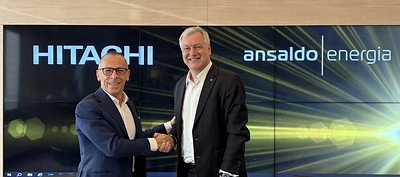
ZÜRICH, Oct. 16, 2026 /PRNewswire/ -- Hitachi Energy and Ansaldo Energia today signed a Memorandum of Understanding to develop and market integrated power solutions designed to help customers secure reliable power faster and meet rapidly growing electricity needs with greater flexibility, resilience and speed.
The collaboration aims to bring together complementary capabilities in power generation and power grid infrastructure, combining Ansaldo Energia's gas-turbine and generator technologies with Hitachi Energy's leadership in full grid system integration spanning high-voltage, transformers, automation and power electronics.
Together, the companies intend to develop integrated power generation and electrification solutions capable of serving both 60 Hz and 50 Hz markets, including deployment in data centers.
The collaboration comes as global electricity demand is expected to nearly double by 2050 as electrification accelerates across digital infrastructure, industry, and transportation. The challenge is particularly acute in the United States, where the rapid expansion of AI and data centers is driving unprecedented demand for power and creating an urgent need for reliable, large-scale energy infrastructure that can be deployed faster.
"Power demand is growing at a pace we have not seen for decades as the world enters the electricity era," said Andreas Schierenbeck, CEO of Hitachi Energy. "As power demand continues to outpace available infrastructure, the need for scalable, rapidly deployable power solutions has become increasingly urgent. By combining our complementary strengths with Ansaldo Energia, we help customers unlock new capacity, accelerate time to power, and build resilient energy systems that support economic growth and digital innovation."
"Meeting the world's growing demand for electricity requires closer collaboration across the entire energy value chain," said Fabrizio Fabbri, CEO of Ansaldo Energia. "By combining Ansaldo Energia's power generation technologies with Hitachi Energy's expertise in grid infrastructure, we will provide integrated solutions that accelerate deployment and deliver the scale, flexibility and reliability required by the next generation of industrial, digital and energy infrastructure."
Through this collaboration, both companies intend to develop an end-to-end solution for various applications, integrating power generation with the complete power transmission system through to the point of consumption, including energy hubs, data centers and other large-scale electricity consumers. Hitachi Energy also aims to support the autonomous and integrated operation of data centers through One Hitachi by combining its end-to-end power solutions with HMAX Data Center.
Trademark Notice: All trademarks and product names are the property of their respective owners.
About Hitachi Energy
Hitachi Energy is a global leader in electrification, powering the electricity era to meet the energy demands of today, and the next 25 years. As the energy arm of Hitachi Group, over three billion people depend on our pioneering, mission-critical technologies to power their daily lives. With over a century of innovation, we are addressing the most urgent energy challenge of our time: driving the evolution of the world's energy system to ensure abundant, secure, affordable, and sustainable power for today's generation and the next. With an unparalleled installed base in over 140 countries, we are the grid ecosystem partner across the utility, industry, data center, and transportation sectors. Headquartered in Switzerland, we employ over 56,000 people in 60 countries and generate revenues of around $20 billion USD.
Https://www.hitachienergy.com
https://www.linkedin.com/company/hitachienergy
https://x.com/HitachiEnergy
About Hitachi, Ltd.
Through its Social Innovation Business (SIB) that brings together IT, OT (Operational Technology) and products, Hitachi aims to be a global leader in continuously transforming social infrastructure through digital, contributing to a harmonized society where the environment, wellbeing, and economic growth are in balance. Hitachi operates worldwide across four sectors – Digital Systems & Services, Energy, Mobility, and Connective Industries – as well as a Strategic SIB Business Unit focused on new growth areas. With Lumada at its core, Hitachi creates value by combining data, technology and domain knowledge to solve customer and social challenges. Revenues for FY2025 (ended March 31, 2026) totaled 10,586.7 billion yen, with 606 consolidated subsidiaries and approximately 290,000 employees worldwide. Visit us at https://www.hitachi.com
About Ansaldo Energia
Ansaldo Energia is a global player in the power generation industry and a key player in energy security and transition. Controlled by CDP Equity, part of Italy's Cassa Depositi e Prestiti Group, Ansaldo Energia is headquartered in Genoa, employs more than 3,500 people and operates through over 30 offices worldwide. The Group designs and manufactures gas and steam turbines and generators for large-scale power plants, while providing upgrades, maintenance and digital services across the entire lifecycle of power generation assets. Its technologies are installed in around 1,000 power plants across 100 countries worldwide. Building on more than 170 years of industrial and technological expertise, Ansaldo Energia supports the transition towards a lower-carbon energy system through advanced, flexible and efficient generation technologies. The Group is also active in the nuclear sector and in the development of technologies for energy transition, including hydrogen production.
https://www.ansaldoenergia.com

 View original content to download multimedia:https://www.prnewswire.co.uk/news-releases/hitachi-energy-and-ansaldo-energia-launch-a-strategic-partnership-to-bring-integrated-power-solutions-to-meet-surging-electricity-demand-302911090.html

Die Österreichischen Bundesbahnen (ÖBB) holen den Bahnhofskomplex Wien-Mitte nach rund zwei Jahrzehnten wieder vollständig in den eigenen Konzern zurück. Der Aufsichtsrat der ÖBB-Infrastruktur AG hat dem Rückkauf des Areals, das 2005 an die damalige BA/CA-Gruppe verkauft worden war, zugestimmt. Verkäufer ist nun eine Investorengruppe unter Führung von Morgan Stanley Real Estate Investing. Neben den Bahnanlagen umfasst die Transaktion auch das Einkaufszentrum "The Mall" sowie umfangreiche Büroflächen. Über den Kaufpreis wurde Stillschweigen vereinbart; der Abschluss steht noch unter dem Vorbehalt der kartellrechtlichen Genehmigung und ist für Ende Dezember geplant.
Mit der Übernahme würden Immobilie und Bahninfrastruktur erstmals seit mehr als zwanzig Jahren wieder in einer Hand zusammengeführt. Wien-Mitte ist gemessen an den Fahrgastzahlen der viertgrößte Bahnhof Österreichs und ein zentraler Verkehrsknoten, an dem sich S-Bahn, mehrere U-Bahn-Linien sowie der Flughafenzug CAT treffen. Täglich halten nach Angaben der ÖBB fast 600 Züge an dem Standort. Bahnanlagen und Gebäude seien baulich und technisch eng miteinander verbunden, heißt es. Künftige Änderungen an Zugängen, Stiegen, Belüftung oder Leitungen müssen damit nicht mehr mit einem externen Immobilieneigentümer abgestimmt werden.
Die ÖBB sehen in dem Rückkauf einen strategischen Schritt, um die Entwicklung des Standorts aus einer Hand zu steuern. Das soll zusätzlichen Handlungsspielraum für die kommenden Jahrzehnte schaffen, in denen die derzeit modernisierte S-Bahn-Stammstrecke mehr Züge aufnehmen soll. Die Funktion des Standorts als Bahnhof soll nach Angaben des Unternehmens wieder stärker im Namen, an den Zugängen und in der architektonischen Gestaltung zum Ausdruck kommen. Für die bestehenden Mietverhältnisse im Einkaufszentrum und in den Büros kündigte die ÖBB an, dass diese unverändert weitergelten.
Wien-Mitte blickt auf eine lange und wechselvolle Geschichte zurück. Der Standort wurde 1848 als Bahnhof Hauptzollamt eröffnet und ging 1934 in das Eigentum der Bahn über. Ab den späten 1950er-Jahren entstanden über den Gleisen unter anderem ein Bürotrakt und eine Markthalle, bevor die Liegenschaft 2005 veräußert wurde. Die spätere Entwicklung des Areals war von intensiven öffentlichen Debatten begleitet, unter anderem wegen geplanter Hochhäuser mit bis zu 97 Metern Höhe und der Diskussion um mögliche Auswirkungen auf den UNESCO-Welterbestatus. Mit der nun geplanten Re-Integration in den ÖBB-Konzern verknüpft das Unternehmen die Aussicht, die verkehrliche Rolle des Standorts und die bauliche Entwicklung langfristig aufeinander abzustimmen.