LOUTRAKI, Greece, June 25, 2026 /PRNewswire/ -- A leading global tire company Hankook Tire & Technology (Hankook), the exclusive tire supplier to the FIA World Rally Championship (WRC), heads to Round 8 of the 2026 WRC, EKO Acropolis Rally Greece, taking place from June 25 to 28 in the Loutraki area of Greece.

Known as 'The Rally of the Gods,' EKO Acropolis Rally Greece is one of the WRC's most traditional and iconic events. With its rough, rocky mountain terrain and extreme heat, the rally has long been regarded by drivers as one of the most grueling rounds of the WRC season.
This season marks a new turning point for the event, as its base shifts from Lamia in central Greece to Loutraki, a coastal city on the Gulf of Corinth. The overall course is centered around the Loutraki service park, spanning approximately 323 kilometers across 17 Special Stages (SS) cutting through rugged mountainous terrain.
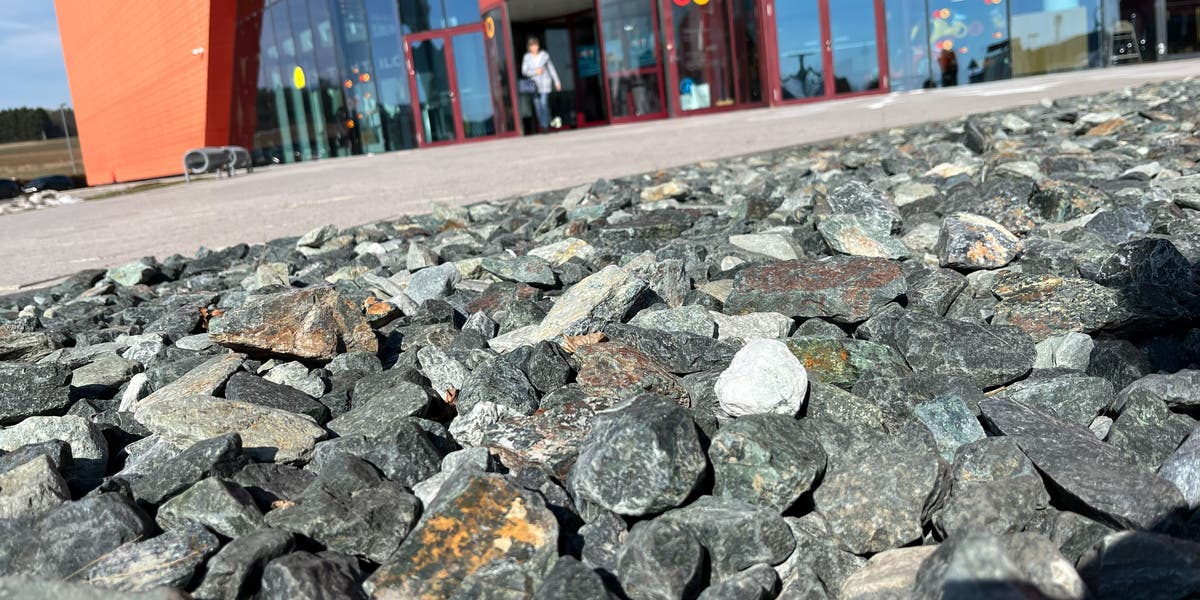
The rally is defined by rough, rocky gravel surfaces and extreme heat exceeding 35 degrees Celsius, placing high demands on tire grip and durability. As crews run the same stages twice, road conditions shift dramatically between passes — the first pass demanding stable handling on loose, gravel-heavy surfaces, while the second exposes sharp rocks and deep ruts that place significant strain on both vehicle and tire.
Hankook will supply its all-terrain rally tire, the Dynapro R213, for the event to address these extreme driving conditions. The tire is engineered with enhanced durability and grip to deliver stable performance across rough gravel terrain and high-load driving conditions.
For this event, Hankook will deploy two enhanced compounds, Hard and Soft, featuring improved performance and durability to support strategic tire management tailored to changing surface conditions. Designed to deliver stable driving performance and steering response amid sharp rocky terrain and rapid surface changes caused by repeated passes, Hankook plans to showcase its innovative technology through performance built to withstand extreme rally conditions.
At the previous round, FORUM8 Rally Japan, Elfyn Evans of Toyota GAZOO Racing World Rally Team claimed victory, further strengthening his lead in the Drivers' Championship standings. Teammates Takamoto Katsuta and Oliver Solberg followed close behind, continuing Toyota's fierce battle for the championship lead.
In addition, Hankook continues to advance high-performance tire technology by integrating driving data gathered from WRC and other major global motorsport competitions into its R&D. Since the 2025 season, Hankook has served as the exclusive rally tire supplier for all WRC classes, demonstrating its global top-tier technological capability and quality competitiveness.

Photo - https://mma.prnewswire.com/media/3000240/Photo_1__2026_WRC_Rally_Portugal___M_Sport_Ford_World_Rally_Team.jpg
Logo - https://mma.prnewswire.com/media/2866236/Hankooktire_CI_Logo.jpg
 View original content:https://www.prnewswire.co.uk/news-releases/hankook-set-to-take-on-scorching-heat-and-rugged-terrain-at-wrc-eko-acropolis-rally-greece-2026-302810307.html

Die Artenvielfalt von Taufliegen (Drosophila) im Raum Wien ist in den vergangenen drei Jahrzehnten massiv eingebrochen. Forschende des Naturhistorischen Museums (NHM) Wien berichten, dass die Zahl der in der Stadt nachgewiesenen Arten im Vergleich zu einer Erhebung aus dem Jahr 1994 um rund 50 Prozent gesunken ist. Die Ergebnisse, die nun im Fachjournal „Ecology and Evolution“ veröffentlicht wurden, deuten darauf hin, dass vormals häufige Arten durch zugewanderte Taufliegen verdrängt worden sein könnten.
Grundlage der aktuellen Analyse ist das Citizen-Science-Projekt „Vienna City Fly“, das 2024 einfache Fliegenfallen an freiwillige Laienforscher in Wien, Niederösterreich und dem Burgenland verteilte. Die zurückgesandten Proben wurden für die nun publizierte Studie gezielt auf Fänge in unmittelbarer Nähe menschlicher Siedlungen beschränkt – also auf Innenräume, Balkone und Gärten. Damit liegt ein detailliertes Bild jener Drosophila-Gemeinschaft vor, die besonders eng an vom Menschen geprägte Lebensräume gebunden ist.
Insgesamt wurden mehr als 18.000 Taufliegen gesammelt und taxonomisch bestimmt; dabei identifizierte das Team um NHM-Forscher Martin Kapun 13 Drosophila-Arten. Bemerkenswert ist der Nachweis zweier Arten, die bislang in Österreich nicht registriert waren: Drosophila (D.) mercatorum und D. virilis. D. mercatorum ist ursprünglich in den USA, Mexiko und Südamerika verbreitet und wurde im vergangenen Jahrhundert nach Europa eingeschleppt, D. virilis stammt aus Asien und hat sich erst seit relativ kurzer Zeit über die nördliche Hemisphäre ausgebreitet.
Die Zusammensetzung der Populationen zeigt eine deutliche Verschiebung hin zu wenigen dominanten Generalisten. D. mercatorum mit rund 8.800 Nachweisen und die Modellorganismus-Art D. melanogaster mit etwa 6.700 Funden waren die mit Abstand häufigsten Spezies in den Proben. „Dominiert wird die Drosophila-Population im Wiener Stadtgebiet von Generalisten mit starker Affinität zum Menschen“, erklärte Kapun der Austria Presse Agentur zufolge. Die Ergebnisse unterstreichen, dass zunehmende Verbauung und die starke Prägung durch menschliche Siedlungen mit einem Rückgang der Biodiversität einhergehen können – auch bei unscheinbaren Insekten, die als wichtige Indikatoren für den Zustand urbaner Ökosysteme gelten.