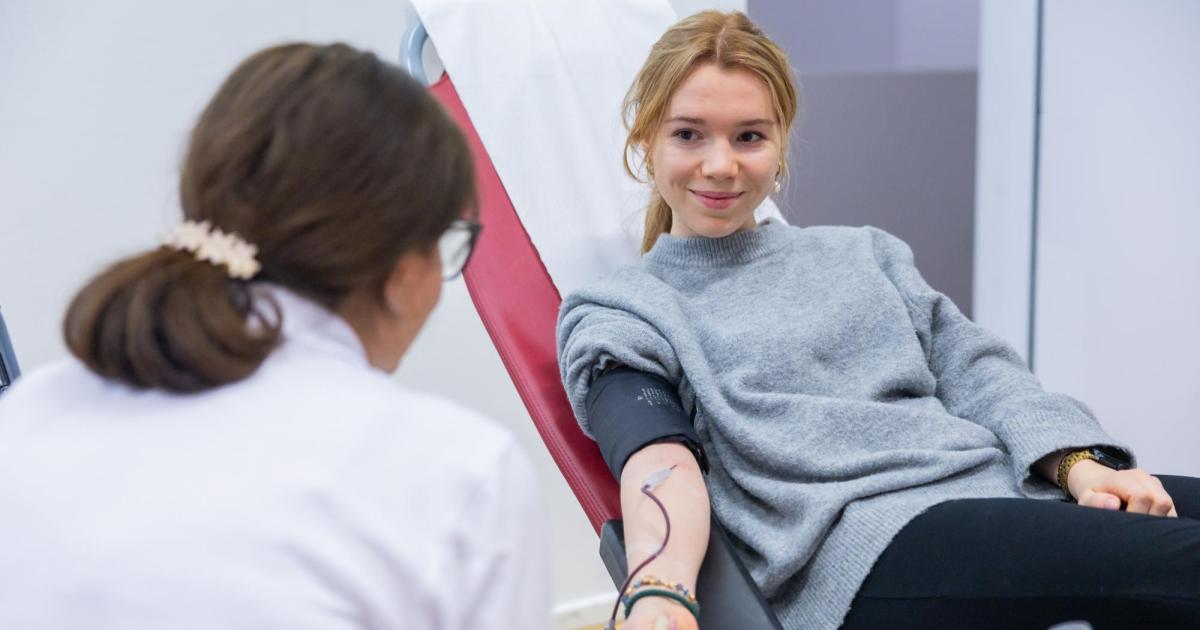
Next-generation spray dried plasma demonstrates safety profile comparable to standard frozen plasma, advancing the future of decentralized transfusion medicine
BOSTON, June 18, 2026 /PRNewswire/ -- Velico today announced the publication of its Phase 1 first-in-human clinical trial evaluating Frontline On Demand Plasma (ODP), a next-generation spray-dried plasma product designed to transform access to lifesaving plasma transfusion in emergency, military, prehospital and austere care environments.
The multicenter, randomized, dose-escalation study, published in the journal Transfusion, demonstrated that Velico's spray-dried plasma was well tolerated across all dose levels and exhibited a safety profile comparable to standard frozen plasma (PF24).
The publication, titled "Next generation spray-dried on-demand plasma: A multicenter, randomized, dose-escalation, first-in-human safety study," marks a major milestone in the evolution of decentralized plasma capabilities.
"This study represents a defining moment not only for Velico, but for the future of trauma care and transfusion medicine," said Richard Meehan. "For decades, the logistical limitations of plasma have prevented widespread access in frontline and resource-constrained settings. FrontlineODP™ has the potential to fundamentally change that paradigm by enabling rapid, portable and operationally resilient plasma availability wherever patients need it most."
Advancing the Future of Plasma Access
Plasma transfusion has been shown to improve survival outcomes in patients at risk of hemorrhagic shock, particularly when administered early. However, traditional frozen plasma products require cold-chain storage, thawing infrastructure and complex logistics - barriers that significantly limit availability in remote, prehospital, military and disaster-response settings.
Velico's FrontlineODP™ addresses these challenges through proprietary spray-drying technology that enables:
The Phase 1 study enrolled 24 healthy volunteers across three sequential dose-escalation cohorts. Participants received escalating doses of FrontlineODP™ up to 800mL, including a randomized, double-blind crossover comparison against standard frozen plasma.
Key findings from the study include:
"These results validate the promise of spray-dried plasma as a next-generation transfusion platform," said Jose A. Cancelas. "The ability to safely deliver plasma without traditional cold-chain constraints has profound implications for trauma systems, military medicine and emergency preparedness globally."
Supporting Military and Civilian Readiness
Velico's decentralized plasma technology is being actively evaluated for applications across military medicine, disaster response, civilian trauma systems and national resilience programs worldwide.
The company's FrontlineODP™ and veliPod™ decentralized production platforms are designed to support sovereign blood resilience strategies by enabling localized plasma manufacturing and rapid deployment capabilities.
"With growing global demand for resilient medical infrastructure, these findings reinforce the importance of deployable, decentralized blood solutions," added Meehan. "Velico remains committed to advancing technologies that improve survivability and operational readiness in the world's most challenging environments."
The full study is available online in Transfusion:
https://doi.org/10.1111/trf.70262
CAUTION:
The FrontlineODP™ Spray Dried Plasma System has not received FDA or EU approval for any indication. Regulatory requirements of individual countries and regions will determine approval, clearance, or market availability.
This project has been funded in whole or in part with federal funds from the Department of Health and Human Services; Administration for Strategic Preparedness and Response; Biomedical Advanced Research and Development Authority, under Contract No. 75A50121C00059
About Velico
Velico is a private US medical technology company, committed to the mission of eliminating preventable death from bleeding. Headquartered in Beverly, Massachusetts, USA. Velico personnel have substantial expertise and experience in transfusion medicine and medical device development. In support of its mission, Velico is developing partnerships with civilian, government and military blood center leadership, trauma surgeons, emergency medical physicians, military medics and first responders worldwide.
For more information visit www.veli.co

 View original content to download multimedia:https://www.prnewswire.co.uk/news-releases/designed-for-the-frontline-validated-in-humans-velico-announces-successful-clinical-trial-302803340.html

Die österreichische Steyr Motors AG baut ihr Geschäft im Bereich autonomer Verteidigungs- und Sicherheitssysteme aus und setzt damit auf einen der am schnellsten wachsenden Segmente der Rüstungsindustrie. Nach bereits realisierten Anwendungen in unbemannten Überwasserfahrzeugen (USV) kommen die Hochleistungsmotoren des Unternehmens nun auch in modernen unbemannten Bodenfahrzeugen (Unmanned Ground Vehicles, UGV) zum Einsatz. Im Zentrum steht dabei die Plattform CORNUS des slowenischen Spezialisten RTC, die künftig mit Antriebstechnologie von Steyr Motors ausgestattet wird.
Das CORNUS-UGV ist als modulare Plattform für anspruchsvolle Einsätze in militärischen und sicherheitsrelevanten Umgebungen ausgelegt. Es lässt sich flexibel für unterschiedliche Missionen konfigurieren, darunter Aufklärungsaufgaben, Logistiktransporte in schwierigem Gelände, die mobile Energieversorgung im Feld sowie die unmittelbare Unterstützung von Einsatzkräften. In all diesen Anwendungen sind Zuverlässigkeit, Robustheit und Ausfallsicherheit zentrale Anforderungen – Bereiche, in denen Steyr Motors auf jahrzehntelange Erfahrung aus Marine-, Spezialfahrzeug- und Defense-Anwendungen verweist.
Der Schritt in den UGV-Markt erfolgt vor dem Hintergrund eines breiten Trends hin zu autonomen und unbemannten Systemen. Weltweit investieren Streitkräfte verstärkt in autonome Aufklärungsplattformen, unbemannte Logistikfahrzeuge, ferngesteuerte Schutzsysteme und maritime Robotik, um Risiken für Soldaten zu verringern und gleichzeitig die operative Leistungsfähigkeit zu erhöhen. Ein jüngstes Beispiel für die wachsende Bedeutung solcher Technologien ist eine US-Rettungsaktion in der Straße von Hormus, bei der unbemannte Überwasserfahrzeuge zum Einsatz kamen und damit die Relevanz autonomer Fahrzeugplattformen unterstrichen haben.
Branchenanalysen veranschlagen das Volumen des globalen Marktes für unbemannte Systeme bis zum Jahr 2033 auf mehr als 67 Milliarden US-Dollar. Steyr Motors sieht sich als Technologiezulieferer gut positioniert, um von dieser Entwicklung zu profitieren. Das Unternehmen betont, dass das Wachstumspotenzial aus autonomen Defense-Lösungen im aktuellen Auftragsbestand erst in Ansätzen abgebildet ist. Der Einstieg in das CORNUS-Programm gilt vor diesem Hintergrund als weiterer Baustein, um die Präsenz im Zukunftsmarkt unbemannter Systeme deutlich auszubauen.