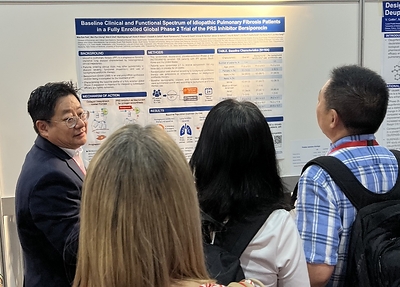
BARCELONA, Spain and SEOUL, South Korea, Sept. 24, 2026 /PRNewswire/ -- Daewoong Pharmaceutical (Co-CEOs Seongsoo Park and Changjae Lee) announced that it presented a poster on the baseline characteristics of all 104 patients enrolled in the global Phase 2 clinical trial of its idiopathic pulmonary fibrosis (IPF) drug candidate 'Bersiporocin (DWN12088)' at the European Respiratory Society (ERS) Congress 2026, held on September 6 (local time) in Barcelona, Spain.
Idiopathic Pulmonary Fibrosis is a disease in which various inflammatory and fibrotic signals interact, leading to excessive production and accumulation of collagen. Bersiporocin, being developed by Daewoong Pharmaceutical, selectively inhibits prolyl-tRNA synthetase (PRS), thereby reducing excessive collagen production associated with fibrosis.
Bersiporocin has a differentiated mechanism of action that targets collagen synthesis downstream of multiple profibrotic signals through PRS inhibition. Based on this distinct mechanism, it is being evaluated both in patients receiving background antifibrotic therapy and in those not receiving such treatment.
This presentation analyzed the baseline clinical and functional characteristics of all IPF patients recruited in South Korea and the United States. Following the presentation of interim enrollment data at KATRDIC 2025, Daewoong Pharmaceutical presented baseline data from the fully enrolled study population for the first time at ERS 2026.
The analysis showed that of the total 104 patients, 55 (52.9%) were from South Korea and 49 (47.1%) from the US. A total of 71 patients (68.3%) were receiving background antifibrotic therapy, while 33 patients (31.7%) were not. Mean forced vital capacity (FVC) was approximately 77% predicted, while mean diffusing capacity of the lungs for carbon monoxide (DLCO) was approximately 51% predicted. Overall, baseline clinical and functional characteristics were generally similar between patients with and without background antifibrotic therapy.
The ongoing global Phase 2 study is a randomized, double-blind, placebo-controlled trial taking place in South Korea and the US. Patients receive either Bersiporocin or a placebo twice daily for 24 weeks, with concomitant use of pirfenidone or nintedanib permitted. The study design reflects real-world IPF treatment settings by including patients both with and without background antifibrotic therapy.
This baseline analysis provides important context for interpreting the Phase 2 efficacy and safety results. Daewoong Pharmaceutical plans to announce top-line Phase 2 results in the first half of 2027.
Meanwhile, Bersiporocin has received Orphan Drug Designation and Fast Track status from the US FDA, as well as Orphan Drug Designation from the European Medicines Agency (EMA), driving its global development forward.
Professor Moo Suk Park of the Department of Pulmonology at Severance Hospital, who participated in the study, said, "This study provides a comprehensive overview of the baseline characteristics of 104 IPF patients enrolled in South Korea and the US. As the study includes patients both with and without background antifibrotic therapy, these baseline data will provide important context for interpreting the efficacy and safety outcomes of Bersiporocin."
Seongsoo Park, CEO of Daewoong Pharmaceutical, stated, "Successfully completing enrollment for the global Phase 2 trial and sharing the full baseline patient profile at ERS 2026 marks a significant milestone in Bersiporocin's development. We will continue to advance the program toward top-line Phase 2 results in H1 2027 and use these findings to inform subsequent global development."
[Reference]
https://drive.google.com/file/d/1XSXImvc5mcgdoSozP_B4BnDlsTW7Pfz_/view
Link to the poster: 'Baseline Clinical and Functional Spectrum of Idiopathic Pulmonary Fibrosis Patients in a Fully Enrolled Global Phase 2 Trial of the PRS Inhibitor Bersiporocin'

 View original content to download multimedia:https://www.prnewswire.co.uk/news-releases/daewoong-pharmaceutical-presents-baseline-characteristics-of-104-patients-in-global-phase-2-trial-for-ipf-drug-candidate-bersiporocin-at-ers-2026-302886913.html

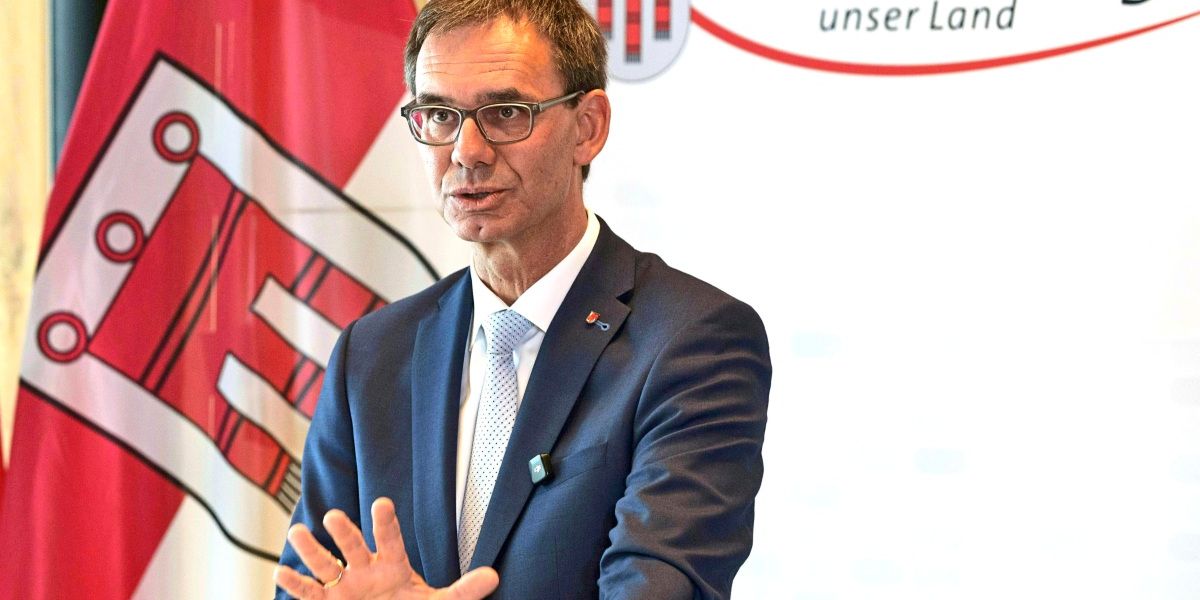
Vorarlbergs Landeshauptmann Markus Wallner (ÖVP) hat die innenpolitische Debatte über den Umgang mit Jugendkriminalität und die Ausgestaltung des Sozialsystems neu angeheizt. In der ORF-„Pressestunde“ brachte der Vorsitzende der Landeshauptleutekonferenz die seit Jahren umstrittene Forderung seiner Partei erneut auf den Tisch, die Strafmündigkeit in Österreich von derzeit 14 auf zwölf Jahre zu senken. „Wer früh Grenzen übertritt, der muss auch damit rechnen, dass früh Grenzen aufgezeigt werden“, sagte Wallner. Allein mit Strafrecht sei es aus seiner Sicht jedoch nicht getan; parallel brauche es ein „Netz an verpflichtenden Unterstützungen“ für betroffene Kinder und Familien.
Zur Begründung verwies Wallner auf Entwicklungen in Schweden. Dort werde über Gefängnisstrafen für 13-Jährige diskutiert, nachdem Berichte über Jugendliche kursierten, die von erwachsenen Tätern für Straftaten instrumentalisiert werden sollen. Eine „Situation wie in den Vororten Stockholms“ wolle er in Österreich verhindern, so der Landeshauptmann, der betonte, er wolle „nicht den Teufel an die Wand malen“, aber vor Fehlentwicklungen warnen. Die ÖVP hatte bereits 2024, unter anderem nach Fällen von Jugendkriminalität, eine Absenkung der Strafmündigkeit gefordert; damals war Innenminister Gerhard Karner treibende Kraft der Debatte.
In der früheren schwarz-grünen Koalition konnte sich die Volkspartei mit dieser Linie nicht durchsetzen. „Mit den Grünen war das aber praktisch unmöglich“, sagte Wallner rückblickend. Aus den Reihen der Grünen kam auch diesmal umgehend Widerspruch. Die grüne Sicherheitssprecherin Agnes Sirkka Prammer bezeichnete es als „Scheinlösung“, Zwölfjährigen mit dem Strafrecht zu begegnen, und plädierte für einen Schwerpunkt auf Prävention: Kinder- und Jugendhilfe, Familienarbeit, Schulsozialarbeit und psychologische Unterstützung müssten ausgebaut werden. Die Länder seien gefordert, dafür ausreichend Ressourcen bereitzustellen.
Parallel zu der Sicherheitsdebatte positionierte sich Wallner bei der anstehenden Neuordnung der Sozialhilfe, einem der zentralen Themen, über die sich die Bundesregierung im Herbst verständigen will. Die Verhandlungen laufen bereits, in der kommenden Woche sollen sie fortgesetzt werden. Wallner betonte, es brauche „eine Sozialhilfe, die Armut verhindert“, warnte aber zugleich vor einer möglichen „Zuwanderung ins System“ und forderte klare Wartefristen für Asylberechtigte. Die Reform müsse auf eine möglichst kurze Bezugsdauer abzielen; Vorarlberg sei hier, was die Dauer des Sozialhilfebezugs betreffe, Vorreiter.
Bei den Leistungen spricht sich Wallner für eine Obergrenze aus. „Ohne Obergrenze wird es nicht gehen“, sagte er mit Blick auf die Gesamtsumme, die ein Haushalt aus der Sozialhilfe beziehen kann. Auch gestaffelte Kinderregelsätze seien aus seiner Sicht notwendig. Jedes Kind sei „gleich viel wert“, aber die Kosten verdreifachten sich nicht automatisch bei drei Kindern, argumentierte der Landeshauptmann. Die neue Sozialhilfe soll nach aktueller Planung mit 1. Jänner 2027 in Kraft treten. Ob der enge Zeitplan hält, ließ Wallner offen, fügte aber hinzu: „Wenn man will, schon“ – und appellierte daran, die Bundesländer „möglichst schnell an den Tisch zu holen“.