CAMBRIDGE, England, Oct. 6, 2026 /PRNewswire/ -- Cambridge Heartwear® Limited (www.camheartwear.com) has secured a landmark £184 million tender with the National Health Service (NHS) of the UK for HeartSense®, the world's first medical-grade, multi-channel, portable, wirelessly charged ECG wearable straight to one's mobile phone, representing a significant advancement in global Medical technology, AI application and cardiovascular diagnostics.
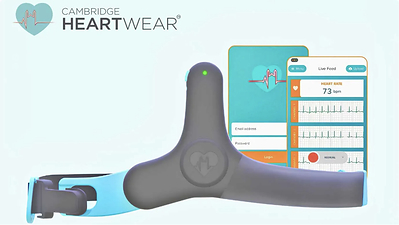
The agreement with the UK National Health Service Supply chain enables the deployment of advanced cardiac monitoring technology across primary and secondary care and civil service departments, empowering patients to diagnose heart rhythm problems whenever and wherever they are to prevent heart failure and strokes earlier, reduce waiting times and support a more preventative approach to Heart Disease, which can take place in the comfort of their own homes.
HeartSense® is the world's first wearable to combine diagnostic-grade multi-channel ECG monitoring, adaptive artificial intelligence and wireless charging in a single device. Manufactured to bridge the gap in women's cardiovascular care with its ergonomic design, the technology gives healthcare professionals and patients access to continuous, real-time ECG data on a mobile phone. giving you back the control of your health at every stage.
Engineered in Cambridge and manufactured in Britain, HeartSense® has been developed to help identify cardiovascular disease and stroke risk before conditions become acute. Its proprietary engineering and AI technology with (86 patents ) support earlier intervention, enabling clinicians to make more informed decisions and improve patient outcomes.
The system is UKCA approved and ISO 13845 certified, with FDA 510(k) applications currently in progress.
"We did not have a UK ECG manufacturer and reporter until now," said Professor Rameen Shakur, Founder of Cambridge Heartwear. "HeartSense® is the world's first medical-grade, AI-powered, multi-channel ECG wearable and demonstrates what can be achieved when clinicians, engineers and AI specialists work together. We want to help move healthcare towards earlier diagnosis, better prevention and improved outcomes for patients across the NHS."
The partnership with the NHS Supply Chain allows Integrated Care Boards to deploy HeartSense® at scale, supporting the delivery of diagnostic-quality heart monitoring beyond hospital environments. The initiative is intended to reduce pressure on secondary care services while improving access to high-quality cardiac diagnostics in community settings.
Founded by Professor Rameen Shakur, Cambridge Heartwear is a medical technology company based at Cambridge Science Park coming out of the University of Cambridge dedicated to making heart health monitoring simple, accessible and accurate. Combining medical research, engineering excellence and artificial intelligence, the company develops advanced wearable technologies that empower patients and healthcare professionals with diagnostic-quality cardiovascular insights anytime, anywhere. HeartSense® helps detect heart conditions earlier, enabling more informed clinical decision-making and better patient care.
Contact: info@camheartwear.com
 View original content to download multimedia:https://www.prnewswire.co.uk/news-releases/cambridge-heartwear-awarded-184-million-nhs-tender-for-worlds-first-medical-grade-wirelessly-charged-reusable-ecg-wearable-302900084.html

Der bewaffnete Juwelenraub im Wiener Museum für angewandte Kunst (MAK) vom 27. August ist nach Einschätzung externer Fachleute nicht auf Versäumnisse der Institution zurückzuführen. Ein 34 Seiten umfassendes Gutachten des Sicherheitsconsulting-Unternehmens LifeLine's kommt zu dem Schluss, dass das Haus sowohl bei den technischen Sicherheitsvorkehrungen als auch beim operativen Vorgehen während des Überfalls und im anschließenden Krisenmanagement korrekt gehandelt hat. Die zentrale Frage, ob das Ereignis sicherheitstechnisch und organisatorisch adäquat bewältigt wurde, beantworten die Gutachter mit einem „klaren Ja“.
Im Fokus der Untersuchung stand die Ausstellung „Glanzstücke. Van Cleef & Arpels High Jewelry x Masterpieces from the MAK Collection“, in deren Juwelenraum zwei bewaffnete Täter mitten am Nachmittag eine Vitrine einschlugen und mit einem historischen Diamantcollier flüchteten. Laut Bericht waren alle mit den Vertragspartnern vereinbarten Sicherheitsstandards und Normen erfüllt. Dazu zählten unter anderem der Einsatz von 185 Videokameras, einer dreistelligen Zahl von Alarmsensoren, speziellem Sicherheitsglas sowie geschultem Sicherheitspersonal. Der nach der Tat eingeführte Einsatz von Metalldetektoren war laut Gutachten zuvor weder verlangt noch durch bestehende Standards vorgesehen.
Besonders hervor hebt der Bericht die bewusste Entscheidung für den Vorrang des Personenschutzes vor dem Objektschutz. Aus diesem Grund verzichtete das Museum auf laute Alarmsignale während der Öffnungszeiten und auf bewaffnete Sicherheitskräfte im Ausstellungsbereich. Die direkte Alarmierung von Polizei und hauseigener Sicherheitszentrale wurde den Angaben zufolge um 14:01:22 Uhr ausgelöst und habe „optimal und effizient“ funktioniert. Auch das Verhalten der anwesenden Securitas-Mitarbeitenden wird positiv bewertet: Sie hätten eine unmittelbare Konfrontation mit den bewaffneten Tätern und damit das Risiko einer Eskalation, etwa durch Panik oder mögliche Geiselnahmen, vermieden.
Die Gutachter kommen insgesamt zu dem Befund, dass ein von professionellen Tätern geplanter und durchgeführter Raub unter regulären Öffnungsbedingungen mit „vernünftigen Mitteln“ nicht vollständig zu verhindern gewesen sei – selbst bei Einsatz moderner Überwachungstechnik und etablierter Sicherheitsprotokolle. Aus ihrer Sicht bestätigt der Fall eine bekannte Grenze musealer Schutzkonzepte: Absolute Sicherheit wäre nur um den Preis massiver Einschränkungen der Bewegungsfreiheit von Besucherinnen und Besuchern zu erreichen, formuliert das Gutachten sinngemäß. Das MAK wird damit für den konkreten Vorfall entlastet, auch wenn der spektakuläre Coup die Debatte über Sicherheitsstandards in Ausstellungshäusern neu anheizen dürfte.