SHANGHAI, Oct. 22, 2026 /PRNewswire/ -- Today, JCET Group (SSE: 600584), a leading global provider of integrated circuit (IC) back-end manufacturing and technology services, released its financial results for the third quarter of 2026. For the first nine months of 2026, JCET recorded revenue of RMB 30.95 billion, an increase of 8% year over year and a record high for the period. Net profit attributable to shareholders rose 69.6% year over year to RMB 1.62 billion. Net profit attributable to shareholders excluding non-recurring gains and losses was RMB 1.56 billion, up 99.2% from the same period last year.
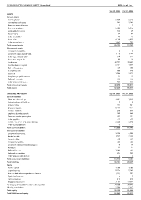
In the third quarter, revenue reached a record RMB 11.43 billion, representing increases of 13.5% year over year and 10.3% sequentially. Net profit attributable to shareholders totaled RMB 770 million, up 60% year over year and 39.4% from the previous quarter. Both revenue and profitability have improved sequentially in each quarter of 2026.
JCET's gross margin improved by 2.3 percentage points year over year during the first nine months of 2026. The increase was primarily driven by a more favorable product mix across the company's manufacturing sites in China and overseas. As JCET's advanced packaging investments increasingly translate into business results, the company continues to benefit from its broad technology portfolio and global manufacturing scale.
In recent years, JCET has remained focused on its core business, directing capital expenditure toward the development of advanced packaging technologies and the expansion of advanced manufacturing capacity. Rather than pursuing short-term gains from financial investments, the company has prioritized sustainable earnings growth from its core operations. This strategy has contributed to the continued increase in net profit attributable to shareholders excluding non-recurring gains and losses, and established a stronger foundation for long-term innovation, operational efficiency and business growth. In line with its strategic priorities and evolving business needs, JCET's Board of Directors has approved an increase in the company's 2026 capital expenditure budget from RMB 9.98 billion to RMB 17.31 billion.
During the period, JCET continued to align its technology roadmap, capacity investments and customer engagement with key end markets. Its Computing Electronics business primarily addresses demand for computing, memory, interconnect and power solutions used in AI data center infrastructure. Revenue from this business increased 54% year over year and accounted for 30.9% of total company revenue in the first nine months.
JCET also maintained strong momentum in automotive electronics. As capacity at its automotive electronics facility in Shanghai came online, revenue from the automotive electronics business grew 30% year over year.
To capture structural growth opportunities, JCET is accelerating the expansion of high-end advanced packaging capacity. During the first nine months, JCET Microelectronics (Jiangyin) Co., Ltd., which specializes in high-end advanced packaging, continued to expand production capacity. The company's new high-end advanced packaging project in Shanghai also progressed steadily.
JCET is advancing its technology roadmap and product portfolio in response to the growing requirements of artificial intelligence and high-performance computing for high-density heterogeneous integration, low-power interconnects and efficient power delivery. The company is working with multiple customers on the joint development of glass substrate and panel-level packaging technologies, with related programs now progressing to pilot-line construction. In co-packaged optics, JCET has established heterogeneous integration capabilities for photonic integrated circuits and electronic integrated circuits through its XDFOI® advanced packaging platform. The company has also developed the capability to co-package optical engines with switching and computing chips.
The transformation of JCET's overseas operations is also gaining momentum. Its manufacturing site in South Korea is accelerating the introduction of high-end advanced packaging programs for leading global wafer manufacturers and AI customers. In Singapore, the company is rapidly shifting its business mix toward higher-value applications, including data centers.
Leveraging its global manufacturing and service network across China, South Korea and Singapore, JCET will continue to strengthen cross-site collaboration and enhance its R&D support, high-volume manufacturing and supply chain capabilities for customers worldwide, further reinforcing its global manufacturing footprint and coordinated delivery capabilities.
For more information, please refer to the JCET Q3 2026 Report
About JCET Group
JCET Group is a global leader in integrated circuit back-end manufacturing and technology services. We provide comprehensive turnkey solutions, including semiconductor package integration design, wafer probing, bumping, assembly, final testing, and global drop shipments.
Utilizing advanced wafer-level packaging, 2.5D/3D packaging, System-in-Package solutions, and reliable flip chip and wire bonding technologies, we support a wide range of applications, including automotive, artificial intelligence, high-performance computing, storage, communication, smart devices, industrial and medical sectors, and power and energy. With cutting-edge R&D centers in China and Korea, and manufacturing facilities across China, Korea, and Singapore, we deliver efficient supply chain solutions and maintain close collaboration with our global customers.

 View original content to download multimedia:https://www.prnewswire.co.uk/news-releases/building-out-advanced-packaging-portfolio-jcet-delivers-steady-revenue-growth-and-improved-profitability-in-q3-ytd-2026-302917010.html

Ein umfangreicher Auswertungsbericht der Wirtschafts- und Korruptionsstaatsanwaltschaft (WKStA) zu digitalen Daten des verstorbenen Justiz-Spitzenbeamten Christian Pilnacek sorgt für neuen politischen und justizinternen Sprengstoff. Chatprotokolle, E-Mails und weitere Unterlagen zeichnen ein Bild tiefgreifender Konflikte innerhalb der Justiz – insbesondere zwischen der WKStA und Teilen der vorgesetzten Behörden. Parallel dazu bereitet ein parlamentarischer Untersuchungsausschuss die Befragung von Schlüsselpersonen vor, um mögliche politische Einflussnahmen auf Ermittlungen rund um Pilnacek und dessen Tod zu beleuchten.
Aus der von der WKStA erstellten Expertise zu Pilnaceks Kommunikationsdaten geht hervor, wie der langjährige Leiter der für Strafrecht zuständigen Sektion im Justizministerium über Jahre hinweg gegenüber der WKStA Stellung bezog. Der Bericht zeigt, dass der damalige Wiener Oberstaatsanwaltschef Johann Fuchs im Juni 2019 in einer internen Nachricht erklärte, er sehe es als Aufgabe seiner Amtszeit, eine von der WKStA angeblich offengelegte „Verkommenheit“ im Berufsstand „mit allen Mitteln zu bekämpfen“. Er bezeichnete Pilnacek darin ausdrücklich als Mitstreiter. In dem Gutachten findet sich zudem Material, aus dem hervorgehen soll, wie die Korruptionsstaatsanwaltschaft aufgelöst und neu aufgesetzt werden könnte.
Die Auswertung des Laptops und mehrerer Speichermedien Pilnaceks, die in einem rund 440 Seiten starken Bericht zusammengefasst wurde, behandelt auch seine Kontakte in das Umfeld der ÖVP. Der frühere Sektionschef war von 2010 bis 2020 über alle wesentlichen Strafsachen der Republik informiert und konnte als weisungsbefugter Beamter Ermittlungsschritte mitsteuern oder Berichte anfordern. Laut dem Bericht kooperierte er in dieser Zeit eng mit ÖVP-nahen Personen und wirkte an der Verteidigung von Beschuldigten mit. Nach Bekanntwerden einer Audioaufnahme aus dem Sommer 2023, in der Pilnacek Interventionen von ÖVP-Seite beklagte, leitete die WKStA ein Ermittlungsverfahren gegen unbekannte Täter ein; dieser Interventionsakt ist nun ebenfalls Gegenstand des U-Ausschusses.
Der Untersuchungsausschuss, der sich mit den Umständen von Pilnaceks Tod und dem Umgang der Behörden befasst, bekommt das WKStA-Dokument zeitlich passend zur nächsten Befragungsrunde vorgelegt. Zunächst soll ein IT-Experte der WKStA, der für das Auslesen von Datenträgern zuständig ist, Auskunft geben. In den darauffolgenden Tagen werden Exekutivbeamte befragt, darunter der Leiter des Bundeskriminalamts sowie zwei Polizeibeamte aus Niederösterreich, die unter anderem mit Pilnaceks Geisterfahrt Stunden vor dem Fund seiner Leiche in einem Donau-Seitenarm befasst waren. Politisch besonders im Fokus steht der Auftritt von Innenminister Gerhard Karner und dessen Kabinettschefin, nachdem eine vom Ressort in Auftrag gegebene Schulungsunterlage für geladene Auskunftspersonen parteiübergreifend – mit Ausnahme der ÖVP – auf Kritik gestoßen war.
Die Kombination aus internen Justizchats, detaillierter Datenauswertung und politischer Aufarbeitung im Parlament verschärft die Debatte über das Verhältnis zwischen Ministerien, Staatsanwaltschaften und Parteien. Während die WKStA ihre Auswertungsergebnisse in den U-Ausschuss einbringt, suchen Abgeordnete nach Antworten auf die Frage, ob und in welchem Ausmaß versucht wurde, auf Ermittlungen Einfluss zu nehmen – sowohl in prominenten Wirtschafts- und Korruptionsfällen als auch im Zusammenhang mit den Untersuchungen nach dem Tod eines der einflussreichsten Justizbeamten der vergangenen Jahre.