YICHANG, China, Oct. 23, 2026 /PRNewswire/ -- Angel Yeast (SSE: 600298), one of the world's leading yeast manufacturers, has hosted the 2026 International Synthetic Biology Symposium and the Angel Group High-Quality Development Conference in Yichang, its headquarters city, on October 19–20, 2026, as part of the company's 40th anniversary celebrations.
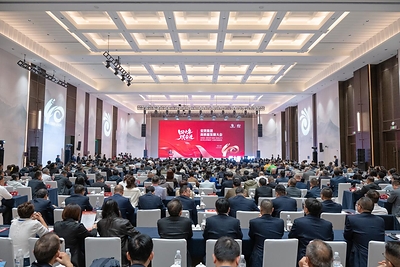
As a highlight of Angel Yeast's 40th anniversary, the event convened over 500 global industry partners, including academicians, experts, scholars, supplier representatives, and customer delegates from China and abroad. It offered a platform to discuss biomanufacturing and synthetic biology trends, industrial innovation, and global supply chain collaboration, showcasing Angel Yeast's strategy of deepening international cooperation through innovation, openness, and localized operations.
The event was both a celebration of Angel Yeast's journey and a launchpad for global partners to deepen biomanufacturing collaboration and shape future growth together.
At the High-Quality Development Conference, Angel Yeast reflected on its journey from starting as an edible yeast pilot base to becoming the world's second-largest producer by sales volume. Today, its products reach 170+ countries and regions, serving 30,000+ customers worldwide with over 20% market share.
In innovation, Angel Yeast has built an industrial microbial strain bank and mastered key technologies in strain selection, cell factory construction and multi-carbon source fermentation. The company invests over USD 149.8 million in R&D annually, employs more than 1,500 researchers, and collaborates with over 70 research institutes worldwide.
Angel Yeast has cumulatively obtained 534 authorized invention patents, with 12 scientific and technological achievements reaching international leading levels. The company has continuously optimized its market layout and refined a research-and-sales synergy mechanism adapted to its new development stage composing of 4 business segments, 6 overseas business divisions and 8 technology centers.
Globally, Angel Yeast operates a multi-regional production and R&D network. Its Egypt plant, after two expansions, is now the world's largest yeast factory, while its new Indonesia plant is set to begin production in Q1 next year. Overseas factories and subsidiaries employ nearly 2,000 foreign staff, with a localization rate exceeding 95%.
Angel Yeast is committed to a circular economy industrial chain: raw materials sourced from agricultural processing, core products serving food health and safety, and by-products feeding back into agriculture. It has built five National Green Factories and one zero-carbon factory, with its Ecovadis rating in the global top 15%. The company also participates in setting international standards, including the Codex Alimentarius standard for yeast products, driving the coordinated global expansion of its products, technologies, standards, and brand.
"Looking ahead, Angel Yeast will vigorously develop new synthetic biology technologies, focusing on new tracks such as future foods, biomedicine, enzyme catalysis and new materials, and agricultural microbiology. We will build a 'biomanufacturing+' industrial cluster, continuously propel the industrial chain toward the high end of the value chain, and strive to build a world-class biotechnology company," remarked Xiong Tao, Chairman of Angel Yeast.

 View original content to download multimedia:https://www.prnewswire.co.uk/news-releases/angel-yeast-marks-40th-anniversary-setting-its-sights-on-becoming-a-global-biotech-powerhouse-302917986.html

Der bewaffnete Juwelenraub im Wiener Museum für angewandte Kunst (MAK) vom 27. August ist nach Einschätzung externer Fachleute nicht auf Versäumnisse der Institution zurückzuführen. Ein 34 Seiten umfassendes Gutachten des Sicherheitsconsulting-Unternehmens LifeLine's kommt zu dem Schluss, dass das Haus sowohl bei den technischen Sicherheitsvorkehrungen als auch beim operativen Vorgehen während des Überfalls und im anschließenden Krisenmanagement korrekt gehandelt hat. Die zentrale Frage, ob das Ereignis sicherheitstechnisch und organisatorisch adäquat bewältigt wurde, beantworten die Gutachter mit einem „klaren Ja“.
Im Fokus der Untersuchung stand die Ausstellung „Glanzstücke. Van Cleef & Arpels High Jewelry x Masterpieces from the MAK Collection“, in deren Juwelenraum zwei bewaffnete Täter mitten am Nachmittag eine Vitrine einschlugen und mit einem historischen Diamantcollier flüchteten. Laut Bericht waren alle mit den Vertragspartnern vereinbarten Sicherheitsstandards und Normen erfüllt. Dazu zählten unter anderem der Einsatz von 185 Videokameras, einer dreistelligen Zahl von Alarmsensoren, speziellem Sicherheitsglas sowie geschultem Sicherheitspersonal. Der nach der Tat eingeführte Einsatz von Metalldetektoren war laut Gutachten zuvor weder verlangt noch durch bestehende Standards vorgesehen.
Besonders hervor hebt der Bericht die bewusste Entscheidung für den Vorrang des Personenschutzes vor dem Objektschutz. Aus diesem Grund verzichtete das Museum auf laute Alarmsignale während der Öffnungszeiten und auf bewaffnete Sicherheitskräfte im Ausstellungsbereich. Die direkte Alarmierung von Polizei und hauseigener Sicherheitszentrale wurde den Angaben zufolge um 14:01:22 Uhr ausgelöst und habe „optimal und effizient“ funktioniert. Auch das Verhalten der anwesenden Securitas-Mitarbeitenden wird positiv bewertet: Sie hätten eine unmittelbare Konfrontation mit den bewaffneten Tätern und damit das Risiko einer Eskalation, etwa durch Panik oder mögliche Geiselnahmen, vermieden.
Die Gutachter kommen insgesamt zu dem Befund, dass ein von professionellen Tätern geplanter und durchgeführter Raub unter regulären Öffnungsbedingungen mit „vernünftigen Mitteln“ nicht vollständig zu verhindern gewesen sei – selbst bei Einsatz moderner Überwachungstechnik und etablierter Sicherheitsprotokolle. Aus ihrer Sicht bestätigt der Fall eine bekannte Grenze musealer Schutzkonzepte: Absolute Sicherheit wäre nur um den Preis massiver Einschränkungen der Bewegungsfreiheit von Besucherinnen und Besuchern zu erreichen, formuliert das Gutachten sinngemäß. Das MAK wird damit für den konkreten Vorfall entlastet, auch wenn der spektakuläre Coup die Debatte über Sicherheitsstandards in Ausstellungshäusern neu anheizen dürfte.