HANGZHOU, China, Oct. 20, 2026 /PRNewswire/ -- AliExpress, the leading global e-commerce marketplace, today announces a global strategic affiliate partnership with YouTube. The partnership brings AliExpress's global product selection into YouTube's creator ecosystem, giving eligible creators access to a wide range of products to feature in their content, along with new commission-earning opportunities.
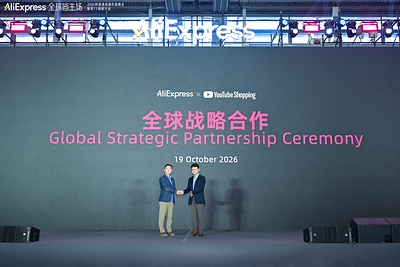
Following the launch of the collaboration in South Korea in March 2026, the partnership will expand to four markets: the United States, Brazil, the United Kingdom and Germany. Further expansion will take place in phases, in line with the rollout of YouTube's affiliate program in new markets.
With YouTube's recent extension of its Shopping Affiliate Program to eligible creators in Germany and the United Kingdom, the partnership will connect participating creators not only in Europe but also eventually in more parts of the world with AliExpress's extensive product offerings. A particular focus is Brand+ — a dedicated selection of branded products from international and local brands.
Creators will be able to discover and select AliExpress products directly within YouTube Studio. The integration connects AliExpress products with YouTube's three major content formats—long-form videos, Shorts, and livestreams—allowing creators to tag shoppable product recommendations across key moments of audience discovery and engagement.
A creator could, for example, tag a consumer electronics product in an unboxing Short or during a face-to-face livestream conversation with viewers. This gives them more ways to monetize their recommendations on qualifying sales, and allows viewers to conveniently purchase as they watch.
Creators can explore AliExpress's products across categories such as consumer electronics, sports and outdoor, home and living, and lifestyle. Using data on bestselling and trending products, they can handpick items that resonate with their audiences. Viewers can link directly from YouTube to AliExpress to complete their purchases, bridging content and commerce seamlessly.
As content plays a growing role in product discovery, creators increasingly help audiences understand products through demonstrations, reviews and real-life use cases. The partnership advances AliExpress's creator commerce strategy by pairing the breadth of its marketplace with the local insight and creative voices of creators in each market.
"Content and commerce are converging globally, and this partnership connects AliExpress's affiliate ecosystem with YouTube's creator ecosystem," said Eric Zhang, Vice President of AliExpress. "By enabling eligible products to be discovered and tagged across videos, Shorts, and livestreams, we are creating a simpler path for products to be featured through creator content at scale—and a more direct journey for consumers from product discovery to purchase."
Eligible YouTube creators in participating markets who meet YouTube's channel and Shopping affiliate requirements can apply through YouTube Studio.
About AliExpress
Launched in 2010, AliExpress is a global e-commerce platform dedicated to creating a better shopping experience for hundreds of millions of consumers in more than 200 countries and regions. In addition to the English version, the AliExpress platform is available in 15 other languages. AliExpress offers a wide range of diverse shopping collections, including Brand+, which connects global consumers with modern tech, feature-rich products, and fair pricing. AliExpress is part of Alibaba International Digital Commerce Group.

 View original content to download multimedia:https://www.prnewswire.co.uk/news-releases/aliexpress-and-youtube-announce-global-strategic-affiliate-partnership-302913646.html

Die niederösterreichische Volkspartei hat mehr als drei Jahre vor der nächsten Landtagswahl zentrale Weichen gestellt und setzt dabei konsequent auf Kontinuität. Landeshauptfrau Johanna Mikl-Leitner wurde vom Landesparteivorstand einstimmig zur Spitzenkandidatin für den Urnengang Anfang Jänner 2028 nominiert. Damit vertraut die ÖVP erneut auf ihre langjährige Landeschefin, die den von ihr ausgerufenen „eigenständigen, niederösterreichischen Weg“ mit den Leitmotiven Leistung, Eigenverantwortung und Hausverstand fortführen will.
Flankiert wird Mikl-Leitner von einem weitgehend bekannten Spitzenteam. Zum siebenköpfigen Führungskreis zählen Landeshauptfrau-Stellvertreter Stephan Pernkopf, Landesrätin Christiane Teschl-Hofmeister, Landesrat Anton (Toni) Kasser, Landtagspräsident Karl Wilfing, Klubobmann Kurt Hackl sowie Landesgeschäftsführer Matthias Zauner. Der entsprechende Beschluss zur Landesliste fiel ebenfalls einstimmig. Innerparteilich soll das Signal innerer Geschlossenheit helfen, sich frühzeitig auf ein erwartbar knappes Duell mit der FPÖ einzustellen.
Bei der Wahlorganisation kehrt die Partei zu einem Modell zurück, das in den vergangenen Monaten intern intensiv diskutiert wurde: In den Regionalwahlkreisen entscheiden wieder Vorzugsstimmen über die Reihung der Kandidaten. Eine Besonderheit ist ein Bonus von fünf Prozent für amtierende Landtagsabgeordnete, berechnet auf Basis der im jeweiligen Wahlkreis abgegebenen ÖVP-Stimmen. Der Schritt verschafft etablierten Mandataren einen spürbaren Startvorteil gegenüber neuen Bewerbern und trägt zugleich der Mobilisierungsstärke einzelner Teilorganisationen wie dem Bauernbund Rechnung.
Politisch rückt die Landespartei neben der strategischen Wahlvorbereitung in den kommenden Monaten vor allem die Themen Wirtschaft, Arbeit, Gesundheit und Kinderbetreuung in den Vordergrund. Mit einer bereits eingerichteten Taskforce Wirtschaft sollen Genehmigungsverfahren beschleunigt und Verwaltungsabläufe im Land langfristig gestrafft werden. Der Gesundheitsplan 2040+ bleibt als groß angelegtes Reformprojekt im Zentrum der Regierungsarbeit. Im Hintergrund bleibt der Druck hoch: Bei der Landtagswahl 2023 war die ÖVP auf 39,93 Prozent zurückgefallen, die FPÖ hatte 24,19 Prozent erreicht; aktuelle Umfragen deuten auf einen weiter schrumpfenden Abstand hin und lassen für 2028 ein deutlich engeres Rennen erwarten, in dem neue Mehrheitskonstellationen möglich werden könnten.