Phase I results provide platform-level validation supporting AdJane's broader development programs in pandemic preparedness, respiratory infectious diseases and antimicrobial resistance
DELFT, Netherlands, July 1, 2026 /PRNewswire/ -- AdJane, a clinical-stage vaccine platform company developing intranasal and intramuscular vaccines based on native Outer Membrane Vesicles (nOMVs), today announces the publication of first-in-human Phase I clinical data in the peer-reviewed journal Vaccines, demonstrating the ability of its proprietary nOMV platform to induce both mucosal and systemic immune responses in humans.

The first-in-human randomized, double-blind, placebo- and OMV-controlled trial in 40 healthy adults demonstrated that AdJane's platform, combined with a SARS-CoV-2 Spike protein and administered intranasally, was safe and well tolerated and induced both systemic and mucosal immune responses. The combination triggered dose-dependent systemic immune responses across multiple measures, including virus-neutralizing antibodies. Importantly, the study showed induction of immune activity at the nasal mucosa — the primary entry site for many respiratory pathogens.
The findings provide clinical proof-of-concept for AdJane's nOMV platform and support its broader application across respiratory pathogens, pandemic preparedness scenarios, and other infectious disease targets currently under development.
"This publication represents an important validation milestone for AdJane and our mucosal nOMV platform," said Anita Gashi, Managing Director of AdJane. "Current injectable vaccines are highly effective at preventing severe disease but have shown limited ability to interrupt infection and transmission at the mucosal level. Our Phase I data demonstrate that intranasal OMV-based vaccination can safely induce both systemic and mucosal immunity in humans, supporting the potential of our platform as a next-generation approach for respiratory infectious diseases and pandemic preparedness."
Addressing the Mucosal Immunity Gap in Vaccines for Respiratory Infections
The COVID-19 pandemic highlighted a major challenge in infectious disease control: while injectable vaccines can provide strong protection against severe disease and death, they generally induce limited immune protection in the upper respiratory tract, where many airborne pathogens initiate infection and transmission. This gap reduces the ability of conventional vaccines to limit person-to-person spread.
Mucosal vaccination approaches aim to address this limitation by generating immune responses directly at the site of pathogen entry, while also inducing broader systemic protection. As interest in transmission-blocking immunity and pandemic preparedness strategies continues to grow globally, mucosal vaccination is increasingly recognized as an important emerging modality in vaccine development.
AdJane's nOMV platform is designed to support rapid adaptation against emerging respiratory pathogens while enabling scalable and practical deployment strategies.
About the OMV Platform
AdJane's nOMV platform is based on more than three decades of scientific research originating from leading Dutch governmental research institutions. The platform utilizes native outer membrane vesicles derived from Neisseria meningitidis bacteria, which naturally stimulate the immune system while closely mimicking bacterial surface structures.
The platform incorporates four proprietary genetic modifications designed to improve safety, manufacturing performance, and deployment flexibility, while preserving the intrinsic immunostimulatory properties of the vesicles. AdJane's platform is designed as a modular plug-and-play technology that enables incorporation of multiple antigens through several engineering approaches, supporting rapid vaccine development against newly emerging pathogens and other infectious disease targets.
The platform is being applied across multiple programs, including pandemic preparedness collaborations targeting broad-spectrum respiratory viral protection in partnership with CEPI, and antimicrobial resistance applications including a CARB-X-supported program against multidrug-resistant Neisseria gonorrhoeae, one of the most commonly reported sexually transmitted bacterial infections responsible for over 80 million new infections annually.
In addition, the platform has demonstrated stability under standard refrigeration conditions for more than 2.5 years, supporting stockpiling and broader global deployment without reliance on ultra-cold supply chains.
About AdJane
AdJane is a clinical-stage vaccine platform company developing next-generation intranasal and intramuscular vaccines based on its native Outer Membrane Vesicle (nOMV) platform technology. The company focuses on pandemic preparedness, antimicrobial resistance, and global infectious disease challenges.
AdJane's platform has been scientifically developed over more than 30 years by leading Dutch governmental research institutions and supports multiple deployment modalities for both prophylactic and therapeutic applications.
AdJane's platform is protected by a layered intellectual property portfolio covering antigen presentation and display technologies, as well as proprietary manufacturing processes and specific applications.
For more information, contact:
Anita Gashi, Managing Director
anita.gashi@adjane.com
+31 6 20 97 90 90
www.adjane.com
About the Study
The Phase I study was a first-in-human, randomized, double-blind, placebo- and OMV-controlled clinical trial conducted in 40 healthy SARS-CoV-2 seropositive adults aged 18–55 years.
Full study results are published in Vaccines and are available at https://www.mdpi.com/3957576. The trial is registered at ClinicalTrials.gov under identifier NCT05604690.
 View original content to download multimedia:https://www.prnewswire.co.uk/news-releases/adjane-reports-first-clinical-validation-of-its-omv-vaccine-platform-inducing-mucosal-immunity-in-humans-302815790.html

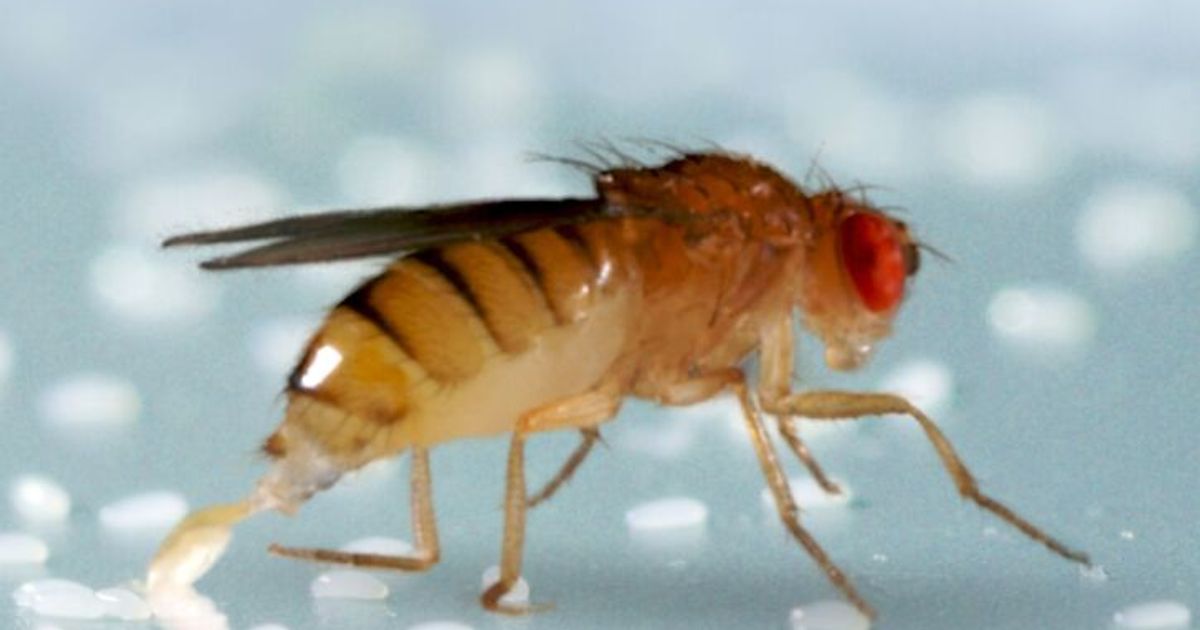
Die Artenvielfalt von Taufliegen (Drosophila) im Raum Wien ist in den vergangenen drei Jahrzehnten massiv eingebrochen. Forschende des Naturhistorischen Museums (NHM) Wien berichten, dass die Zahl der in der Stadt nachgewiesenen Arten im Vergleich zu einer Erhebung aus dem Jahr 1994 um rund 50 Prozent gesunken ist. Die Ergebnisse, die nun im Fachjournal „Ecology and Evolution“ veröffentlicht wurden, deuten darauf hin, dass vormals häufige Arten durch zugewanderte Taufliegen verdrängt worden sein könnten.
Grundlage der aktuellen Analyse ist das Citizen-Science-Projekt „Vienna City Fly“, das 2024 einfache Fliegenfallen an freiwillige Laienforscher in Wien, Niederösterreich und dem Burgenland verteilte. Die zurückgesandten Proben wurden für die nun publizierte Studie gezielt auf Fänge in unmittelbarer Nähe menschlicher Siedlungen beschränkt – also auf Innenräume, Balkone und Gärten. Damit liegt ein detailliertes Bild jener Drosophila-Gemeinschaft vor, die besonders eng an vom Menschen geprägte Lebensräume gebunden ist.
Insgesamt wurden mehr als 18.000 Taufliegen gesammelt und taxonomisch bestimmt; dabei identifizierte das Team um NHM-Forscher Martin Kapun 13 Drosophila-Arten. Bemerkenswert ist der Nachweis zweier Arten, die bislang in Österreich nicht registriert waren: Drosophila (D.) mercatorum und D. virilis. D. mercatorum ist ursprünglich in den USA, Mexiko und Südamerika verbreitet und wurde im vergangenen Jahrhundert nach Europa eingeschleppt, D. virilis stammt aus Asien und hat sich erst seit relativ kurzer Zeit über die nördliche Hemisphäre ausgebreitet.
Die Zusammensetzung der Populationen zeigt eine deutliche Verschiebung hin zu wenigen dominanten Generalisten. D. mercatorum mit rund 8.800 Nachweisen und die Modellorganismus-Art D. melanogaster mit etwa 6.700 Funden waren die mit Abstand häufigsten Spezies in den Proben. „Dominiert wird die Drosophila-Population im Wiener Stadtgebiet von Generalisten mit starker Affinität zum Menschen“, erklärte Kapun der Austria Presse Agentur zufolge. Die Ergebnisse unterstreichen, dass zunehmende Verbauung und die starke Prägung durch menschliche Siedlungen mit einem Rückgang der Biodiversität einhergehen können – auch bei unscheinbaren Insekten, die als wichtige Indikatoren für den Zustand urbaner Ökosysteme gelten.